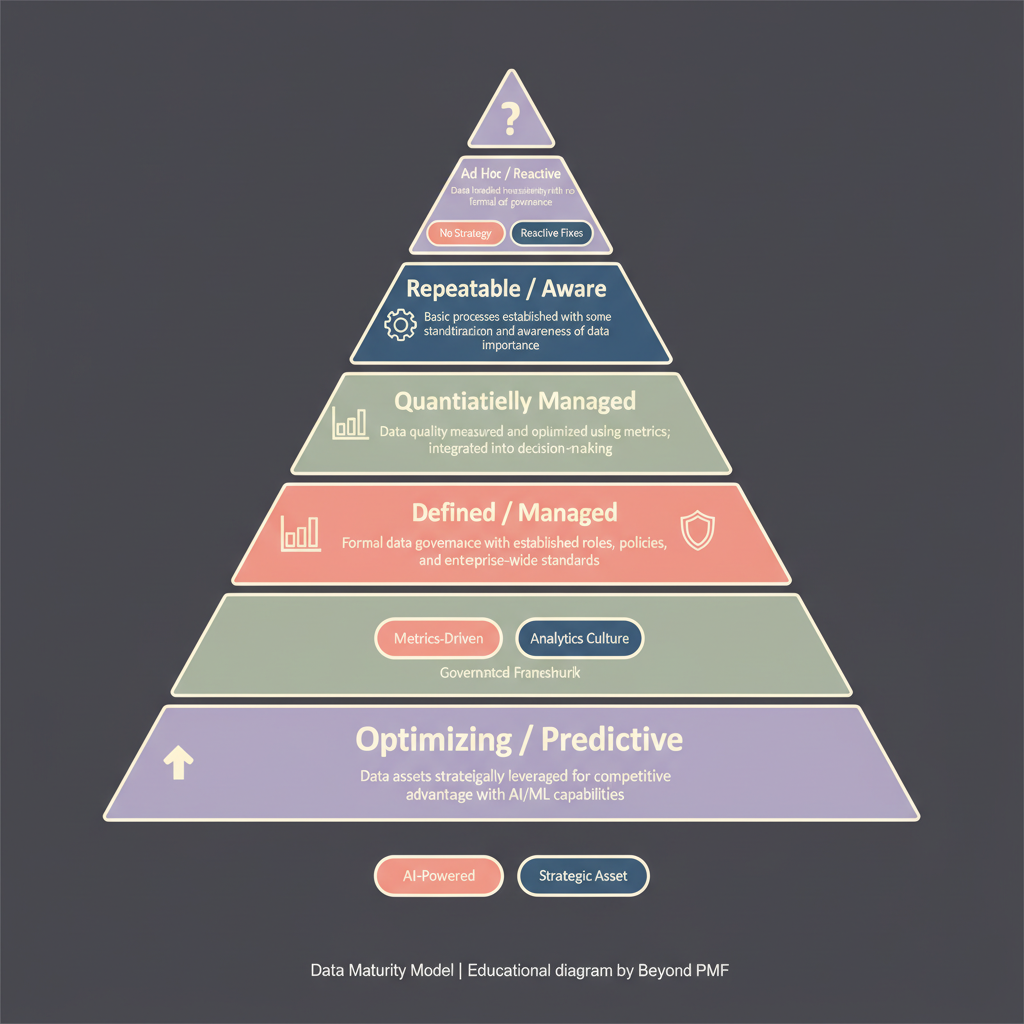
The Data Maturity Model is a framework designed to evaluate and enhance an organization's data management and utilization capabilities. It provides a structured approach to identifying the current level of data maturity, setting realistic goals for improvement, and implementing best practices in data handling and analysis. This model is crucial for organizations aiming to leverage data for strategic advantage, ensuring that data practices evolve in alignment with business goals.
Assessment of Current Data Practices: Evaluate existing data management, quality, and governance practices. | Definition of Maturity Levels: Establish clear maturity stages that the organization aims to achieve. | Gap Analysis: Identify discrepancies between current practices and desired maturity level. | Strategic Planning: Develop a roadmap to address gaps and improve data capabilities. | Implementation: Execute the improvement plans with specific initiatives and projects. | Continuous Improvement: Regularly review and refine data practices to advance maturity.
Start with a thorough assessment of current data capabilities | Engage stakeholders from across the organization | Focus on incremental improvements rather than a complete overhaul
Enhanced decision-making through better data quality and accessibility | Improved compliance and risk management | Increased organizational efficiency and effectiveness
Can be time-consuming and resource-intensive | Requires significant change management and staff buy-in | May initially disrupt existing processes
When aiming to improve data-driven decision-making | When preparing for scaling operations or new data-intensive projects
In very small organizations with limited data needs | When immediate, short-term improvements are required without the capacity for a thorough assessment