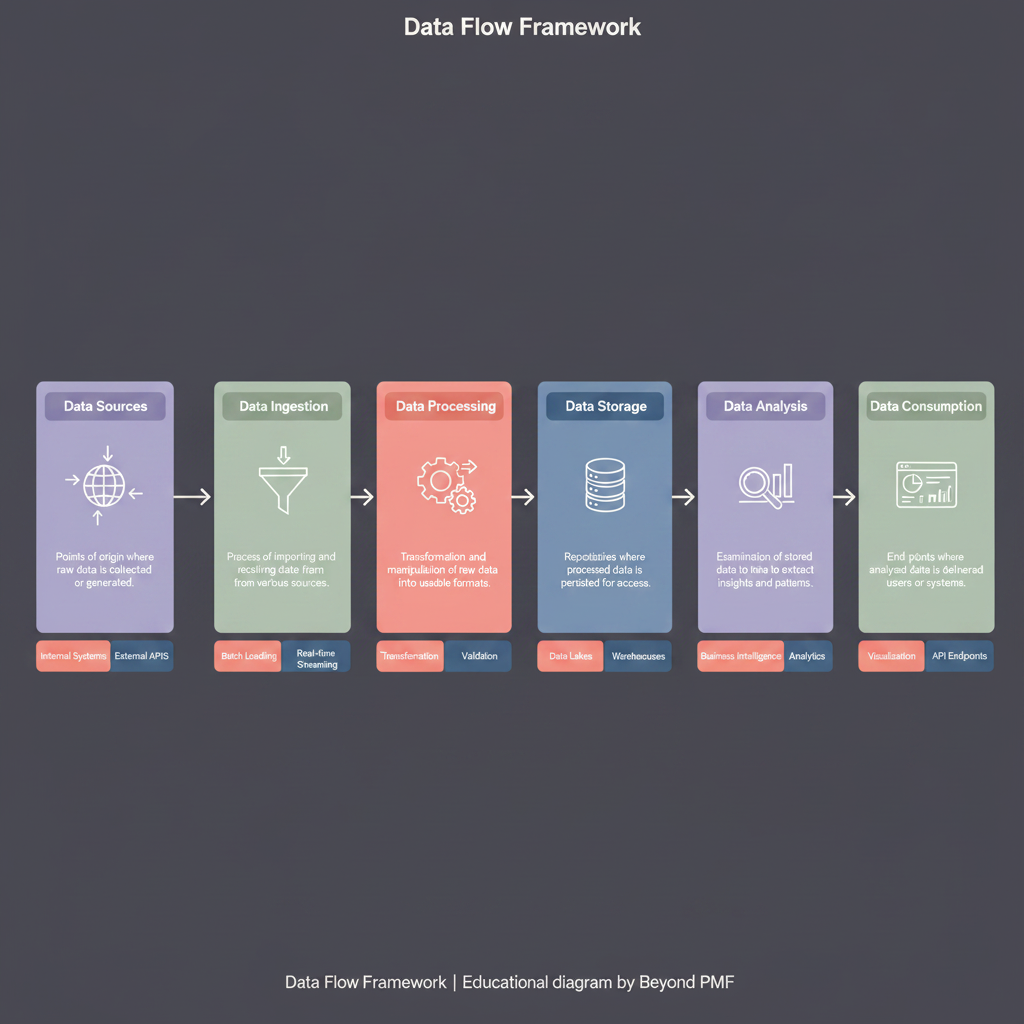
The Data Flow Framework provides a systematic method for analyzing, designing, and implementing data movement across various systems and processes within an organization. It focuses on ensuring data integrity, security, and efficiency from the point of creation to the point of consumption. The framework is used to streamline data processes, reduce redundancy, and enhance data-driven decision-making, making it crucial for organizations dealing with large volumes of data.
Identify data sources and destinations: Map out where data originates and where it needs to go. | Define data flow processes: Establish the pathways and methods for data movement. | Implement data control measures: Set up checkpoints and validation to ensure data quality and security. | Monitor and optimize data flow: Continuously assess the flow efficiency and make adjustments as needed.
Regularly update data flow diagrams | Implement robust data validation checks | Utilize automation tools for data movement
Enhanced data integrity and accuracy | Improved data security | Optimized data processing efficiency
Complexity in setup and maintenance | Potential high initial costs | Requires continuous monitoring and updating
When managing large and complex data sets | When integrating new data sources or systems
For small-scale or simple data management needs | When data security is not a priority