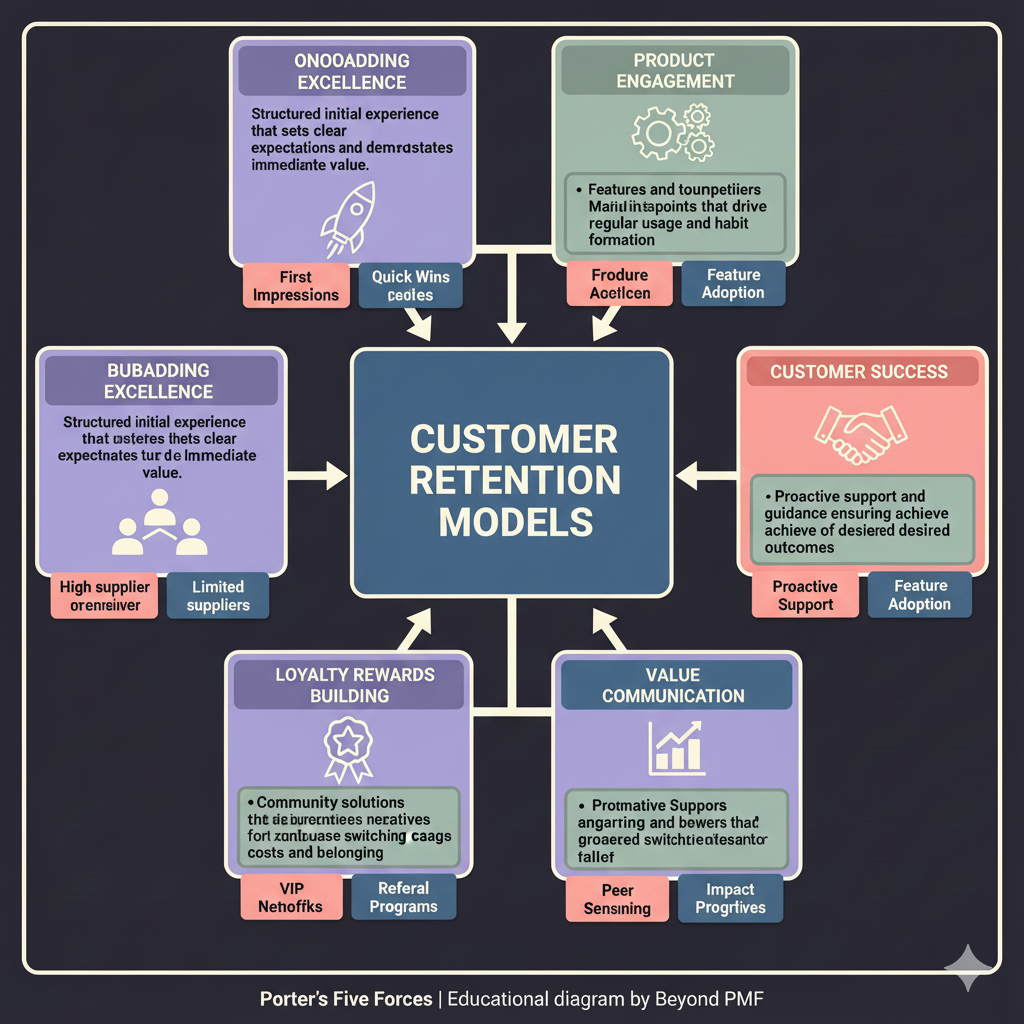
Customer Retention Models

https://ik.imagekit.io/beyondpmf/frameworks/customer-retention-models.png
Customer Retention Models directly address customer engagement and continued use of a brand or product. This framework focuses on the customer experience and the successful delivery of value to prevent churn.

Customer Retention Models encompass a variety of strategies and methodologies aimed at keeping customers engaged and loyal to a brand over time. These models analyze customer behavior, satisfaction, and engagement to develop personalized interactions and offers that encourage repeat business. The use of these models helps companies reduce churn rates, increase customer lifetime value, and optimize marketing efforts based on detailed insights into customer preferences and needs.

Steps / Detailed Description

Identify key customer segments based on behavior, value, and needs. | Analyze customer data to understand patterns and predict future behaviors. | Develop personalized engagement strategies tailored to each segment. | Implement loyalty programs or incentives to reward repeat customers. | Monitor and adjust strategies based on customer feedback and retention rates.

Best Practices

Regularly update customer data to maintain accuracy. | Focus on personalized communication and offers. | Measure the impact of retention strategies and adjust as needed.

Pros

Increases customer lifetime value | Reduces customer acquisition costs | Enhances customer satisfaction and loyalty

Cons

Requires significant data collection and analysis | Can be resource-intensive to implement and maintain | Risk of privacy concerns and data security

When to Use

When experiencing high customer churn rates | When aiming to increase overall profitability through existing customers

When Not to Use

In markets with low competition and customer turnover | When the cost of retention strategies exceeds the potential revenue gain

Related Frameworks

Lifecycle

Not tied to a specific lifecycle stage

Scope

Scope not defined

Maturity Level

Maturity level not specified

Time to Implement

2–4 Weeks
3–6 Months
1–2 Weeks
3–6 Months
1–2 Months
3–6 Months
1–2 Weeks
Less Than 1 Day
1–2 Weeks
Longer Than 6 Months
1–2 Weeks
Longer Than 6 Months
1–2 Weeks
3–6 Months
1–2 Weeks
1–2 Weeks
1–2 Weeks
1–2 Weeks
1–2 Days
1–2 Weeks
1–2 Weeks
1–2 Weeks
1–2 Weeks
1–2 Weeks
1–2 Weeks
3–6 Months
1–2 Weeks
1–2 Weeks
1–2 Weeks
3–6 Months
1–2 Weeks
1–2 Weeks
2–4 Weeks
1–2 Weeks
1–2 Days
1–2 Weeks
Longer Than 6 Months
3–6 Months
Longer Than 6 Months
1–2 Weeks
Longer Than 6 Months
3–6 Months
Less Than 1 Day
3–6 Months
1–2 Months
3–6 Months
Longer Than 6 Months
3–6 Months
Less Than 1 Day
1–2 Weeks
3–6 Months
3–6 Months
1–2 Weeks
3–6 Months
1–2 Weeks
1–2 Weeks
1–2 Days
1–2 Weeks
1–2 Months
Longer Than 6 Months
1–2 Weeks
Longer Than 6 Months
1–2 Weeks
3–6 Months
1–2 Weeks
Less Than 1 Day
1–2 Weeks
3–6 Months
1–2 Weeks
3–6 Months
1–2 Weeks
1–2 Weeks
Longer Than 6 Months
Less Than 1 Day
3–6 Months
Longer Than 6 Months
1–2 Months
1–2 Weeks
Longer Than 6 Months
1–2 Weeks
3–6 Months
1–2 Weeks
1–2 Weeks
3–6 Months
Less Than 1 Day
1–2 Weeks
1–2 Weeks
3–6 Months
3–6 Months
Less Than 1 Day
1–2 Weeks
Longer Than 6 Months
1–2 Months
1–2 Weeks
1–2 Weeks
1–2 Weeks
Longer Than 6 Months

Copyright Information

Autor:
Public Domain
N/A
Publication:
Generic Business Tool