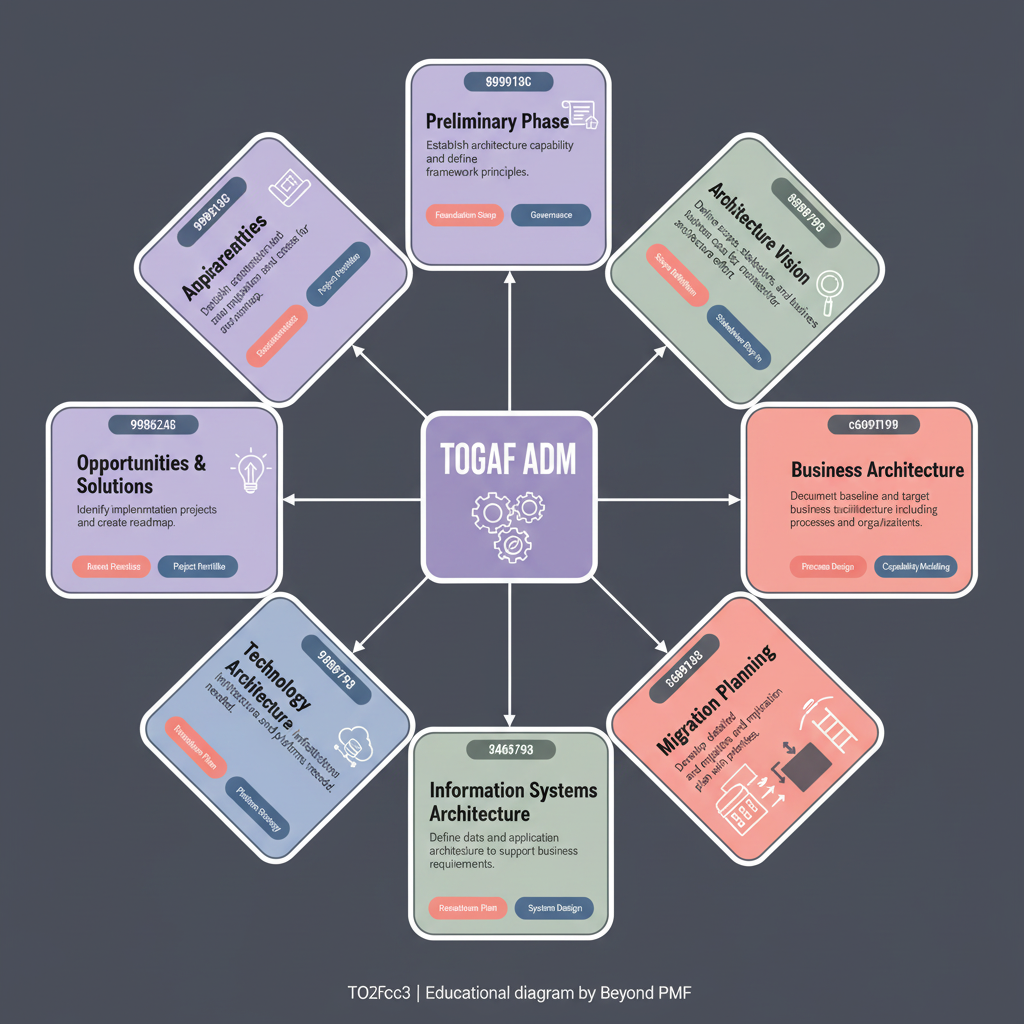
TOGAF ADM, or the Architecture Development Method, is a core component of The Open Group's Architecture Framework (TOGAF). It provides a systematic approach for organizations to plan, design, implement, and manage their enterprise architecture. The method is iterative and encompasses a series of steps that help enterprises align IT strategy with business goals, ensuring that IT systems are agile and efficient. The ADM is widely used due to its comprehensive nature and adaptability to various business environments.
Preliminary Phase: Establish the architecture project. | Phase A: Architecture Vision - Develop a high-level vision of the intended outcome. | Phase B: Business Architecture - Document the business strategy, governance, and key business processes. | Phase C: Information Systems Architectures - Develop data and application architectures. | Phase D: Technology Architecture - Define the hardware, software, and network infrastructure. | Phase E: Opportunities and Solutions - Identify delivery vehicles for the architecture defined. | Phase F: Migration Planning - Create a detailed implementation plan. | Phase G: Implementation Governance - Oversee the implementation of the architecture. | Phase H: Architecture Change Management - Manage changes to the new architecture. | Requirements Management: Continuously manage project requirements as they evolve.
Ensure stakeholder engagement throughout the process. | Regularly update and review the architecture to keep it relevant. | Tailor the ADM phases to fit the specific needs and scale of the organization.
Provides a comprehensive and systematic approach to architecture development. | Facilitates alignment of IT with business goals. | Supports adaptability and scalability in changing business environments.
Can be complex and time-consuming to implement. | Requires significant resources and commitment from the organization. | May be overly rigid or bureaucratic in some business contexts.
When developing a new enterprise architecture. | When updating or transforming an existing IT infrastructure.
For small-scale or less complex projects where a full architectural methodology is not required. | When rapid deployment is necessary and the time for comprehensive planning is not available.