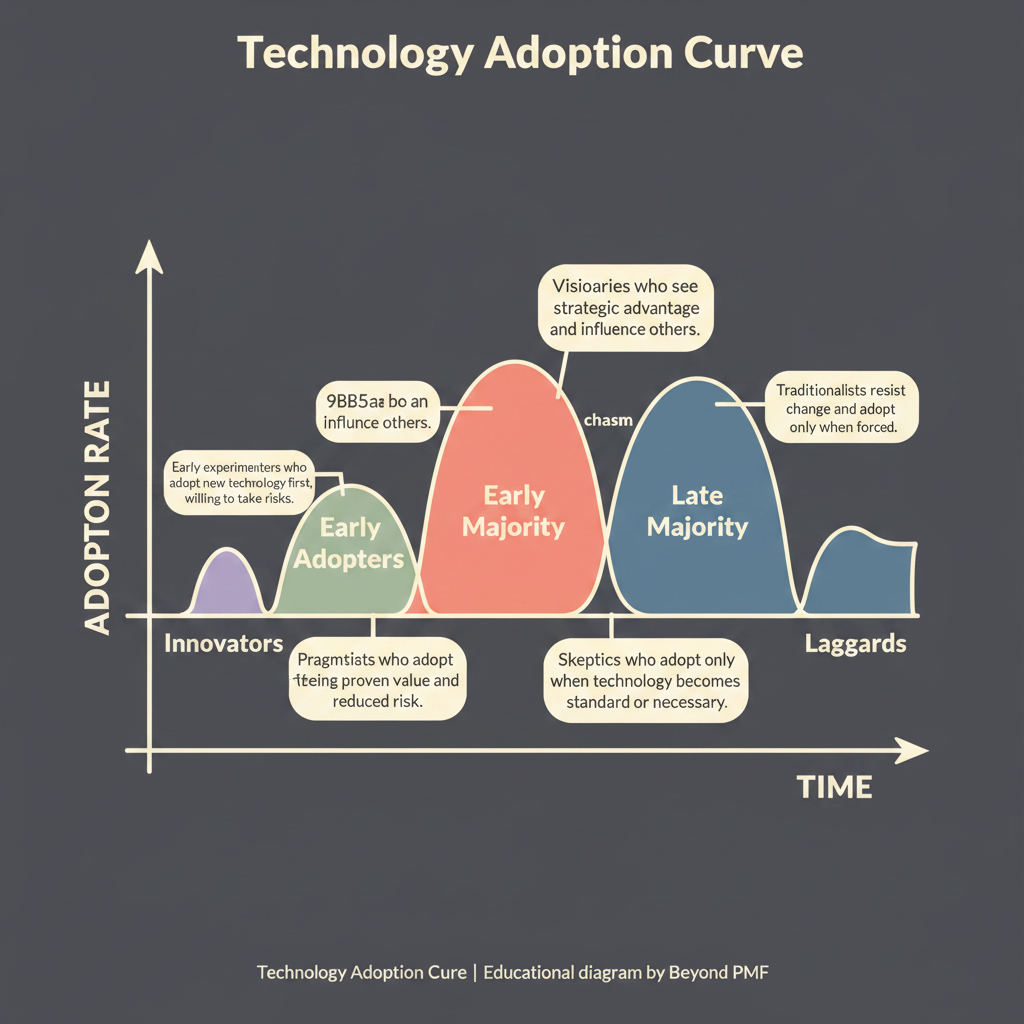
The Technology Adoption Curve is a sociological model that describes the adoption or acceptance of a new product or innovation, according to the demographic and psychological characteristics of defined adopter groups. The framework helps businesses understand how different groups adopt technologies, enabling them to strategically target marketing efforts and product development. The model is particularly beneficial in predicting technology acceptance, tailoring communication strategies, and maximizing market penetration over time.
Identify Innovators: Focus on the very first users who are eager to try new ideas at a high risk. | Target Early Adopters: These individuals have the highest degree of opinion leadership among the other adopter categories. | Engage the Early Majority: These are pragmatists who adopt new technology before the average person. | Address the Late Majority: Skeptics who adopt new technology only after the majority of society has accepted it. | Consider the Laggards: Focus on the last group to adopt an innovation. They typically have an aversion to change and tend to stick to traditions.
Segment your market based on the characteristics of each group in the curve | Tailor communication and marketing strategies to each segment's preferences and behaviors | Monitor adoption rates regularly to adjust strategies as needed
Provides a clear framework for understanding customer adoption patterns | Helps in tailoring marketing strategies to different segments | Facilitates better prediction of product penetration and growth
May oversimplify the adoption process by categorizing individuals | Can lead to neglect of market segments not fitting neatly into categories | Potentially ignores the influence of external factors on adoption rates
Launching a new technology product | Planning marketing strategies for different stages of product life cycle
Products that do not rely on technological change | When rapid market shifts require more dynamic models