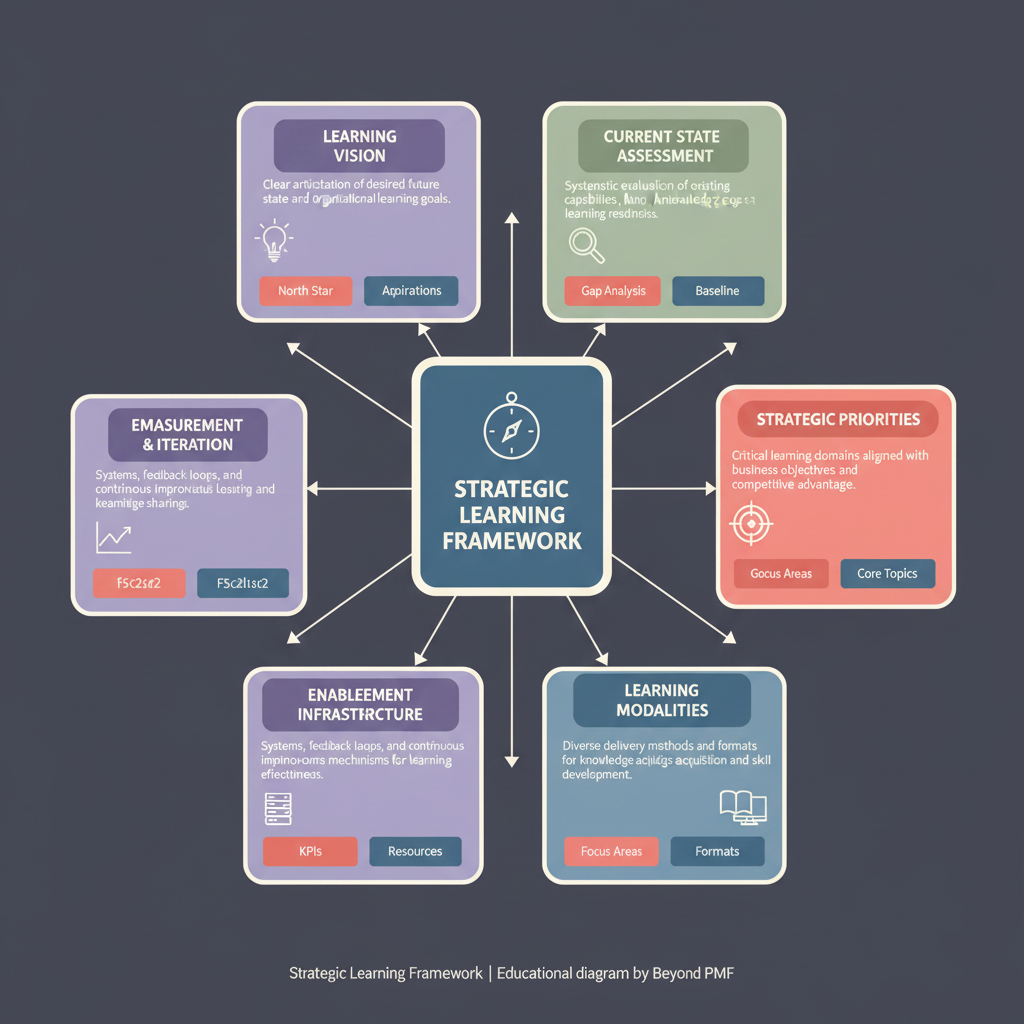
Strategic Learning Framework

https://ik.imagekit.io/beyondpmf/frameworks/strategic-learning-framework.png
The Strategic Learning Framework addresses friction related to unclear organizational direction and a lack of alignment between learning initiatives and overall strategic goals. It aims to ensure that learning activities directly support and contribute to the organization's vision, strategy, and business model.

The Strategic Learning Framework is a comprehensive approach that aligns learning and development with the strategic objectives of an organization. It emphasizes the importance of continuous learning and adapting to ensure that employee skills remain relevant and contribute directly to business goals. This framework not only facilitates individual and organizational growth but also enhances competitive advantage by fostering an agile and knowledgeable workforce.

Steps / Detailed Description

Identify strategic objectives: Define the key business goals and challenges that the learning initiatives should address. | Assess learning needs: Conduct a thorough analysis of the current skills, knowledge gaps, and learning preferences within the organization. | Design learning interventions: Develop tailored learning solutions that align with the strategic objectives and address the identified needs. | Implement learning solutions: Roll out the learning interventions, ensuring they are accessible and engaging for all participants. | Evaluate and measure impact: Continuously assess the effectiveness of the learning initiatives against strategic goals and make necessary adjustments.

Best Practices

Ensure top management support and involvement | Regularly update learning programs to reflect strategic shifts | Use metrics to track progress and impact on business goals

Pros

Enhances alignment between individual performance and business objectives | Promotes a culture of continuous improvement and learning | Improves organizational agility and responsiveness to market changes

Cons

Can be resource-intensive in terms of time and cost | Requires strong leadership and commitment to sustain | May face resistance from employees unaccustomed to continuous learning

When to Use

During periods of strategic change or organizational restructuring | When launching new products or services that require new skills

When Not to Use

In highly stable environments with no significant changes in strategy | When immediate, short-term performance is the sole focus

Related Frameworks

Lifecycle

Not tied to a specific lifecycle stage

Scope

Scope not defined

Maturity Level

Maturity level not specified

Time to Implement

2–4 Weeks
3–6 Months
1–2 Weeks
3–6 Months
1–2 Months
3–6 Months
1–2 Weeks
Less Than 1 Day
1–2 Weeks
Longer Than 6 Months
1–2 Weeks
Longer Than 6 Months
1–2 Weeks
3–6 Months
1–2 Weeks
1–2 Weeks
1–2 Weeks
1–2 Weeks
1–2 Days
1–2 Weeks
1–2 Weeks
1–2 Weeks
1–2 Weeks
1–2 Weeks
1–2 Weeks
3–6 Months
1–2 Weeks
1–2 Weeks
1–2 Weeks
3–6 Months
1–2 Weeks
1–2 Weeks
2–4 Weeks
1–2 Weeks
1–2 Days
1–2 Weeks
Longer Than 6 Months
3–6 Months
Longer Than 6 Months
1–2 Weeks
Longer Than 6 Months
3–6 Months
Less Than 1 Day
3–6 Months
1–2 Months
3–6 Months
Longer Than 6 Months
3–6 Months
Less Than 1 Day
1–2 Weeks
3–6 Months
3–6 Months
1–2 Weeks
3–6 Months
1–2 Weeks
1–2 Weeks
1–2 Days
1–2 Weeks
1–2 Months
Longer Than 6 Months
1–2 Weeks
Longer Than 6 Months
1–2 Weeks
3–6 Months
1–2 Weeks
Less Than 1 Day
1–2 Weeks
3–6 Months
1–2 Weeks
3–6 Months
1–2 Weeks
1–2 Weeks
Longer Than 6 Months
Less Than 1 Day
3–6 Months
Longer Than 6 Months
1–2 Months
1–2 Weeks
Longer Than 6 Months
1–2 Weeks
3–6 Months
1–2 Weeks
1–2 Weeks
3–6 Months
Less Than 1 Day
1–2 Weeks
1–2 Weeks
3–6 Months
3–6 Months
Less Than 1 Day
1–2 Weeks
Longer Than 6 Months
1–2 Months
1–2 Weeks
1–2 Weeks
1–2 Weeks
Longer Than 6 Months

Copyright Information

Autor:
Unknown
N/A
Publication:
Unknown