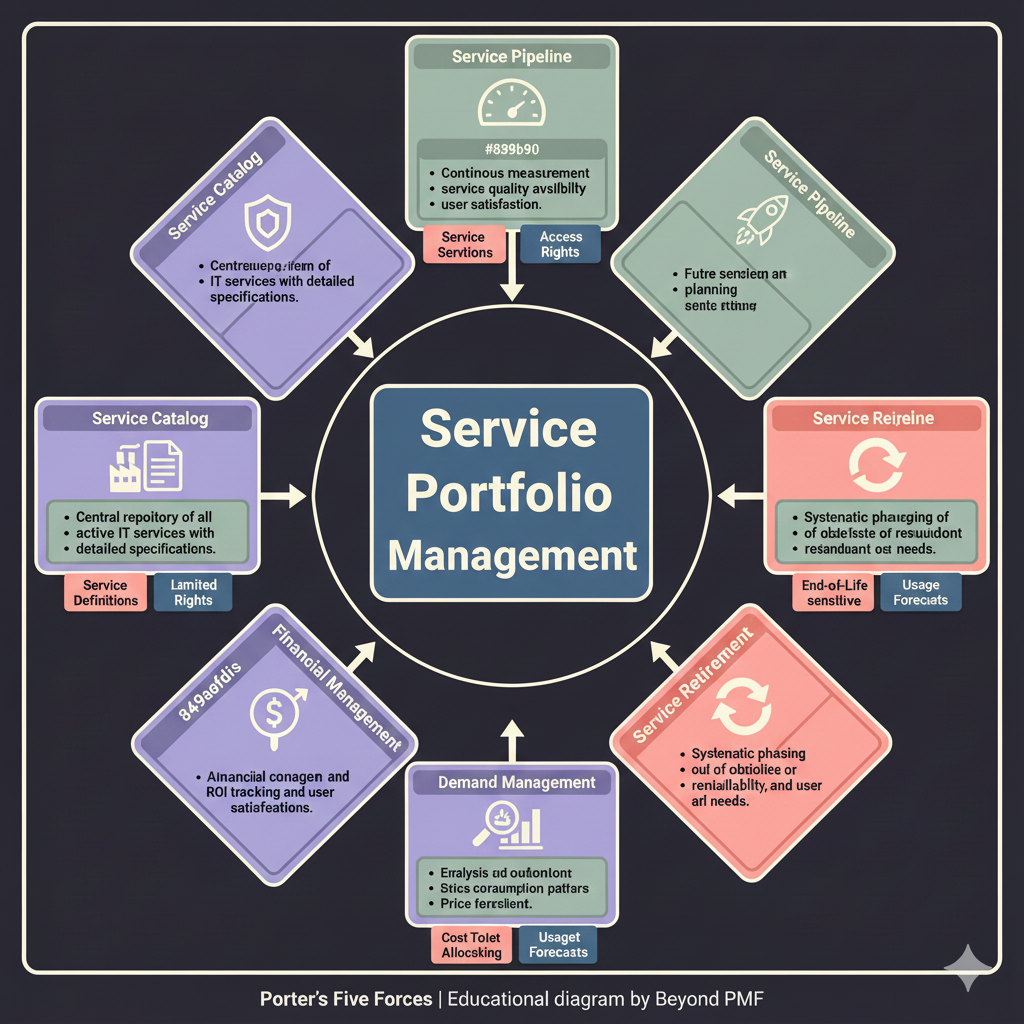
Service Portfolio Management is a comprehensive approach used by organizations to manage the entire lifecycle of their services, from conception to retirement. It involves the documentation, tracking, and strategic management of all service components to ensure they align with the business objectives and meet customer needs. The framework helps in maximizing service efficiency, optimizing resource allocation, and enhancing customer satisfaction.
Define the service portfolio: Identify and categorize all services offered, including those in development, active, and retired stages. | Analyze business impact: Evaluate how each service impacts business objectives and customer satisfaction. | Allocate resources: Determine and allocate resources based on the priority and impact of services. | Monitor performance: Regularly assess the performance of services to ensure they meet predefined metrics and business needs. | Adjust and optimize: Continuously refine services based on feedback and performance data to better align with business goals.
Maintain a centralized and updated service portfolio | Regularly review and assess the service portfolio against business goals | Engage stakeholders in the planning and evaluation phases
Enhanced decision-making through clear visibility of services | Improved resource allocation based on service performance and impact | Increased customer satisfaction by aligning services with customer needs
Can be resource-intensive to implement and maintain | Requires continuous updates and adjustments | Potential resistance from stakeholders due to changes in service management
When managing a diverse range of services | When needing to align IT services with business objectives
In very small organizations with limited services | When rapid, frequent changes in services occur, making documentation challenging