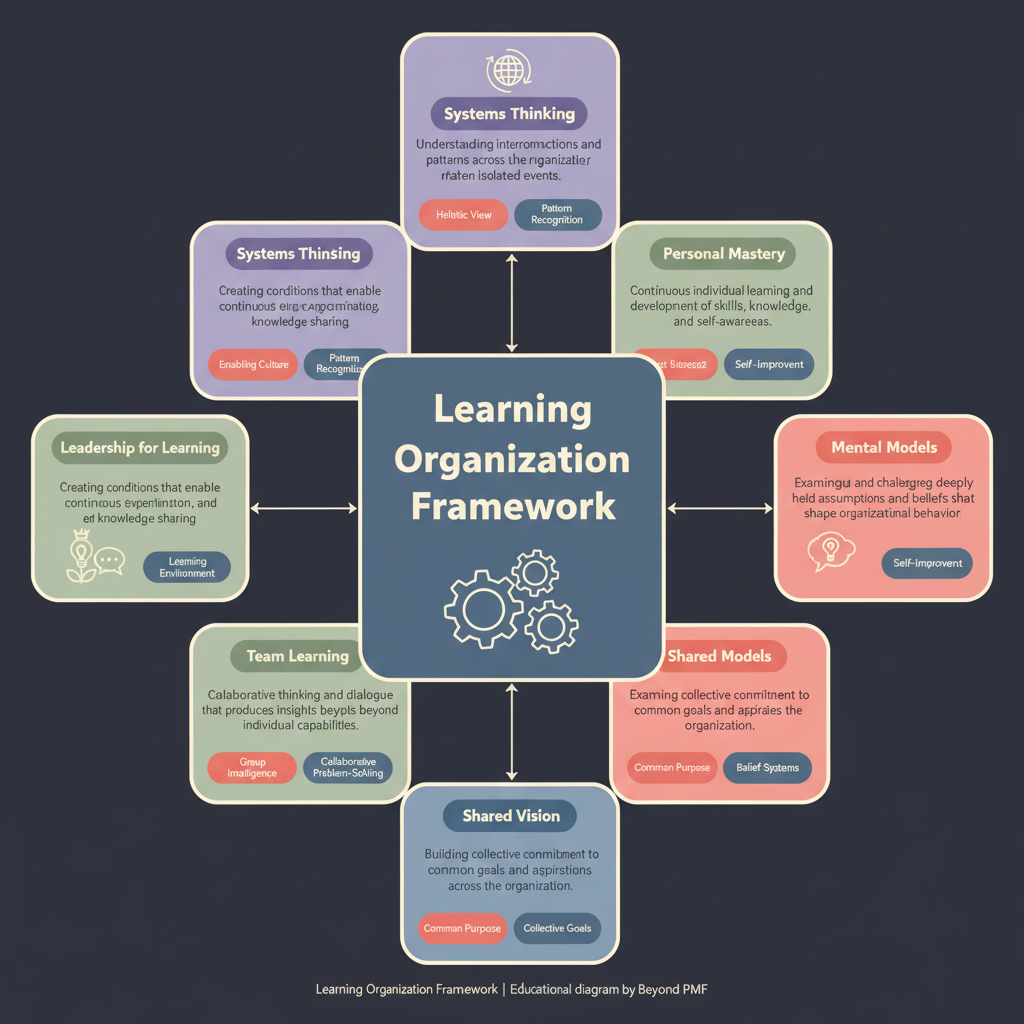
Learning Organization Framework

https://ik.imagekit.io/beyondpmf/frameworks/learning-organization-framework.png
The Learning Organization Framework addresses the strategic friction of adapting to a changing environment by fostering a culture of continuous learning and improvement. This helps organizations maintain market alignment and evolve their business model to match the changing needs of the business.

The Learning Organization Framework is a conceptual model that emphasizes the importance of continuous learning and adaptation within organizations. It is used to foster an environment where employees are encouraged to learn from their experiences and from each other, leading to sustained innovation and improvement. The framework helps organizations become more dynamic and better equipped to respond to external changes and internal challenges.

Steps / Detailed Description

Develop a shared vision to guide learning and development. | Implement systems to facilitate knowledge sharing and management. | Encourage open dialogue and communication to foster a culture of trust. | Promote team learning to solve problems collaboratively. | Link individual performance with organizational learning objectives.

Best Practices

Align learning objectives with strategic goals. | Encourage leadership to actively participate and support learning initiatives. | Regularly review and update learning practices to ensure relevance.

Pros

Enhances adaptability and responsiveness to changes. | Promotes innovation through continual learning and knowledge sharing. | Improves employee engagement and job satisfaction.

Cons

Requires significant time and resource investment. | Cultural resistance can hinder implementation. | Difficult to measure direct impact on financial performance.

When to Use

In rapidly changing industries where adaptability is crucial. | When an organization is facing significant internal or external challenges.

When Not to Use

In highly regulated industries where changes must be carefully controlled. | When immediate results are required, as the benefits of a learning organization develop over time.

Related Frameworks

Lifecycle

Not tied to a specific lifecycle stage

Scope

Scope not defined

Maturity Level

Maturity level not specified

Time to Implement

2–4 Weeks
3–6 Months
1–2 Weeks
3–6 Months
1–2 Months
3–6 Months
1–2 Weeks
Less Than 1 Day
1–2 Weeks
Longer Than 6 Months
1–2 Weeks
Longer Than 6 Months
1–2 Weeks
3–6 Months
1–2 Weeks
1–2 Weeks
1–2 Weeks
1–2 Weeks
1–2 Days
1–2 Weeks
1–2 Weeks
1–2 Weeks
1–2 Weeks
1–2 Weeks
1–2 Weeks
3–6 Months
1–2 Weeks
1–2 Weeks
1–2 Weeks
3–6 Months
1–2 Weeks
1–2 Weeks
2–4 Weeks
1–2 Weeks
1–2 Days
1–2 Weeks
Longer Than 6 Months
3–6 Months
Longer Than 6 Months
1–2 Weeks
Longer Than 6 Months
3–6 Months
Less Than 1 Day
3–6 Months
1–2 Months
3–6 Months
Longer Than 6 Months
3–6 Months
Less Than 1 Day
1–2 Weeks
3–6 Months
3–6 Months
1–2 Weeks
3–6 Months
1–2 Weeks
1–2 Weeks
1–2 Days
1–2 Weeks
1–2 Months
Longer Than 6 Months
1–2 Weeks
Longer Than 6 Months
1–2 Weeks
3–6 Months
1–2 Weeks
Less Than 1 Day
1–2 Weeks
3–6 Months
1–2 Weeks
3–6 Months
1–2 Weeks
1–2 Weeks
Longer Than 6 Months
Less Than 1 Day
3–6 Months
Longer Than 6 Months
1–2 Months
1–2 Weeks
Longer Than 6 Months
1–2 Weeks
3–6 Months
1–2 Weeks
1–2 Weeks
3–6 Months
Less Than 1 Day
1–2 Weeks
1–2 Weeks
3–6 Months
3–6 Months
Less Than 1 Day
1–2 Weeks
Longer Than 6 Months
1–2 Months
1–2 Weeks
1–2 Weeks
1–2 Weeks
Longer Than 6 Months

Copyright Information

Autor:
Unknown
N/A
Publication:
Generic Business Tool