
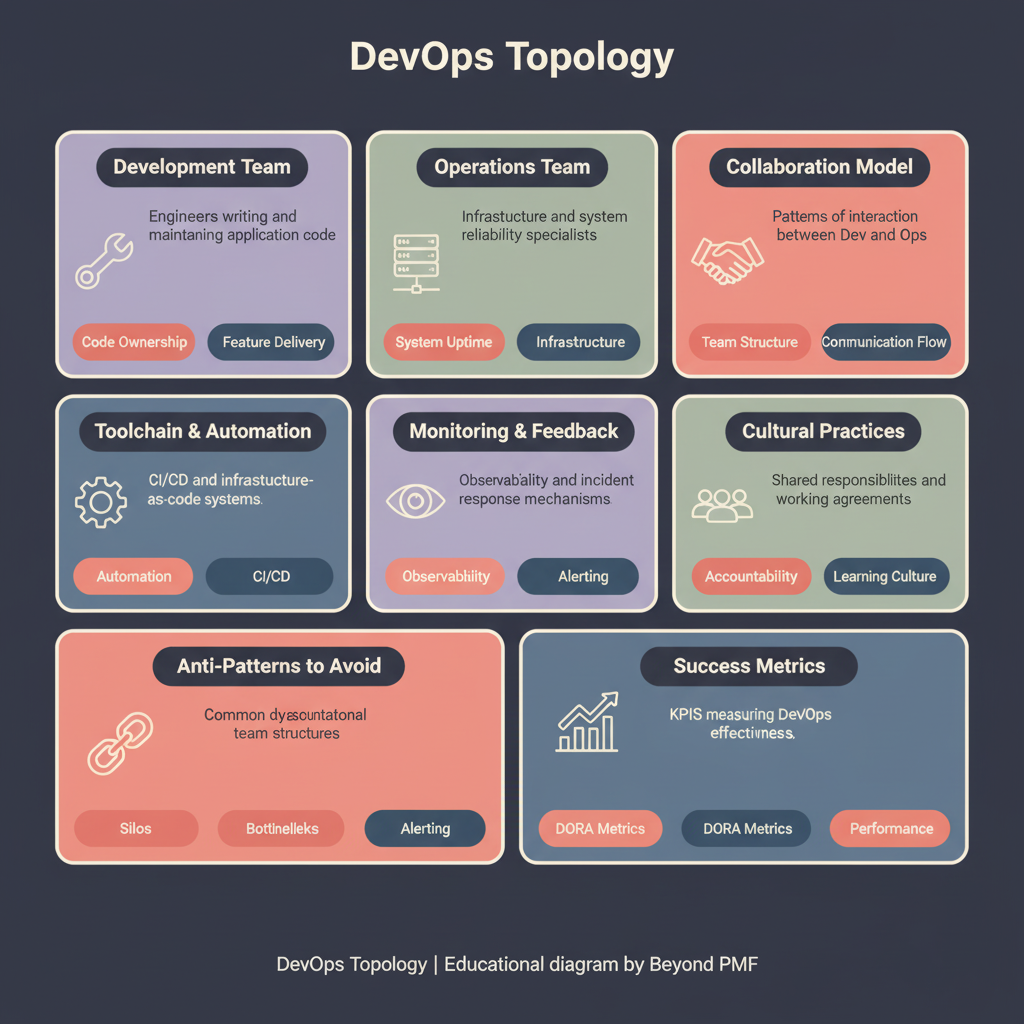
DevOps Topology is a framework that outlines different models for integrating DevOps practices within an organization. It helps in identifying the most effective structure to foster collaboration between development and operations teams. By analyzing various topological models, organizations can streamline processes, enhance communication, and improve deployment frequencies, which leads to faster time-to-market and better product quality.
Identify the current organizational structure and its impact on DevOps practices. | Evaluate different DevOps topological models such as DevOps Outside the Team, DevOps Inside the Team, and Platform as a Service. | Select the model that best fits the organization's culture, size, and business goals. | Implement the chosen topology model by restructuring teams, defining new roles, and aligning processes. | Monitor and optimize the new structure to ensure continuous improvement in collaboration and efficiency.
Start with a pilot project to test the selected topology before full implementation | Ensure top management support and adequate training for all stakeholders | Regularly review and adjust the topology based on feedback and performance metrics
Enhanced collaboration between development and operations teams | Improved deployment frequency and product quality | Flexible adaptation to organizational needs and culture
Potential initial resistance to organizational change | Complexity in selecting and implementing the right model | Risk of misalignment with business objectives if not properly managed
When aiming to improve collaboration between development and operations | When seeking to optimize software delivery processes
In very small organizations where informal communication is sufficient | When the current organizational structure already supports optimal DevOps practices without issues