
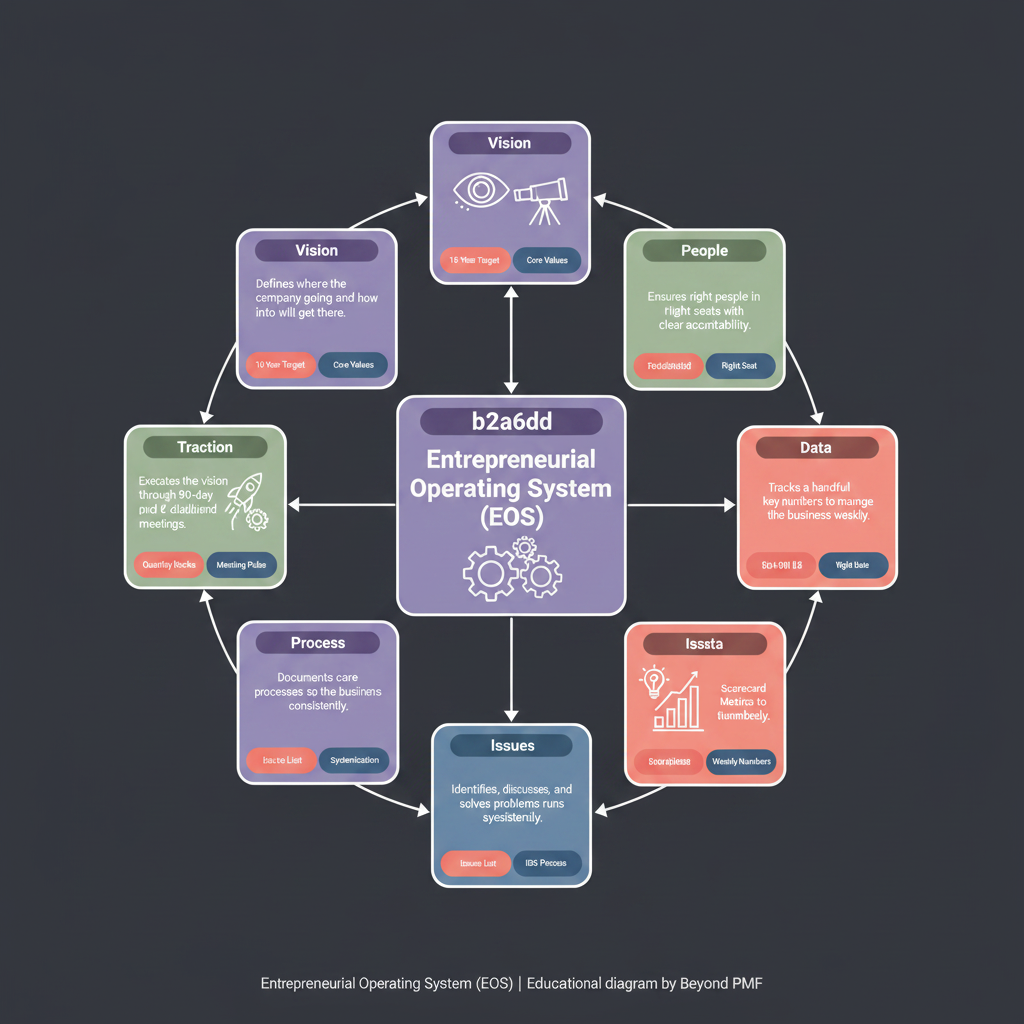
The Entrepreneurial Operating System (EOS) is a comprehensive business management framework used by small to mid-sized companies to foster growth and enhance performance. It provides a set of simple concepts and practical tools that help entrepreneurs and business leaders get better at three things: vision, traction, and health. By focusing on these areas, organizations can synchronize all their efforts and energy to achieve their goals more effectively. The system emphasizes discipline and accountability throughout the company, making it easier to execute business plans successfully.
Vision: Define where you want your business to go and how you will get there. | People: Surround yourself with the right people who can help you achieve your vision. | Data: Focus on objective measurements to guide decisions and track performance. | Issues: Identify, discuss, and solve issues systematically to keep moving forward. | Process: Document and systematize your business processes to ensure consistency and scalability. | Traction: Bring discipline and accountability into the organization, ensuring that everyone executes on the vision every day.
Regularly review and update the company's vision and goals | Ensure all team members are trained on the EOS principles | Use the EOS tools consistently for best results
Provides a clear structure for business operations | Enhances accountability and discipline across the organization | Improves alignment and focus towards achieving set goals
May be overly rigid for very creative or rapidly changing industries | Can be challenging to implement without full buy-in from all team members | Requires continual discipline and adherence to the processes
When a business needs to streamline operations and increase efficiency | When a company is looking to scale up and needs a robust framework to manage growth
In highly innovative environments where flexibility is more valuable than process | For very small teams where formal structures may hinder rapid decision-making