
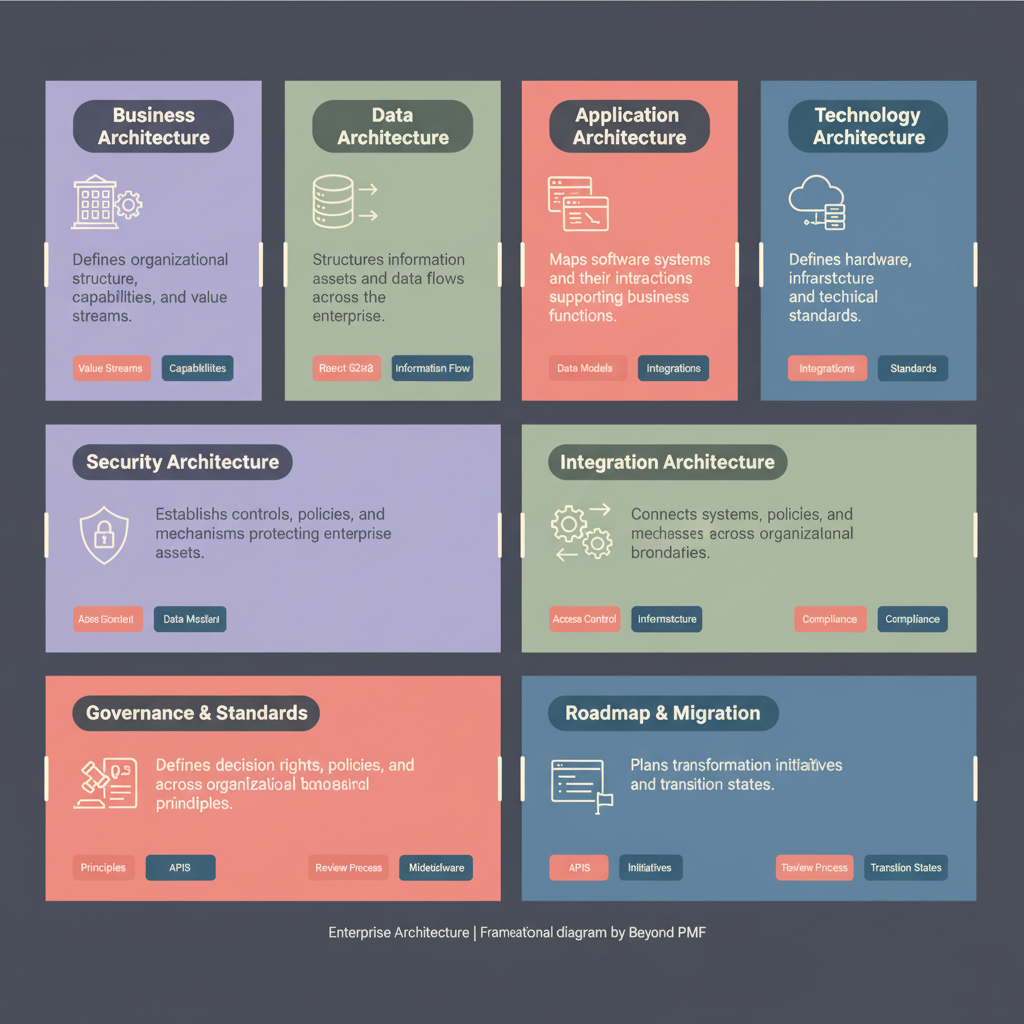
An Enterprise Architecture Framework is a set of tools and methods used to analyze, design, plan, and implement business strategies with IT support. It helps organizations structure their IT projects and policies to achieve their business objectives efficiently. The framework ensures that IT investments are aligned with business goals, providing a blueprint for future growth and scalability.
Define the scope and components of the architecture. | Develop a baseline architecture to understand the current state. | Define a target architecture that aligns with business goals. | Analyze the gap between current and target states. | Create a roadmap for transition from baseline to target architecture. | Implement the necessary changes and monitor progress.
Regularly update the framework to reflect changes in business strategy. | Ensure stakeholder engagement and communication throughout the process. | Use a phased approach to implementation to manage risks and resources.
Improves alignment between IT and business strategies. | Enhances transparency and control over IT investments. | Facilitates better decision-making and risk management.
Can be time-consuming and resource-intensive. | Requires high-level executive support and understanding. | May become rigid and inhibit flexibility if not regularly updated.
When aligning IT strategy with business objectives. | During major organizational changes or mergers.
In very small organizations where IT needs are straightforward. | When rapid flexibility and innovation are required without structured constraints.