Hybrid Agile Framework

https://ik.imagekit.io/beyondpmf/frameworks/hybrid-agile-framework.png
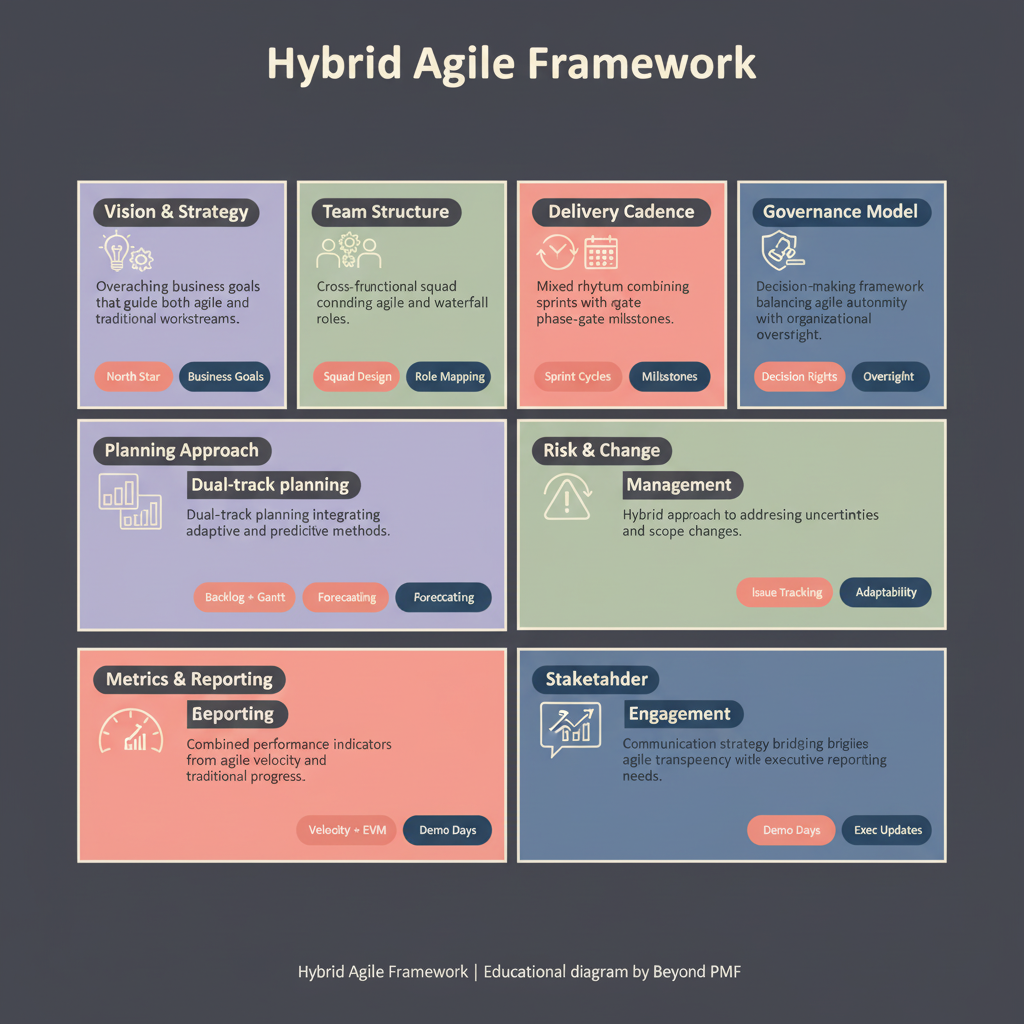
The Hybrid Agile Framework primarily addresses friction in processes, handoffs, and coordination. It aims to streamline workflows by combining established project management methods with agile practices, improving how work gets done.

The Hybrid Agile Framework is designed to integrate the structured phases of traditional project management with the iterative and flexible elements of Agile methodologies. This framework is particularly useful in environments where some level of predictability and planning is necessary, alongside the need for adaptability and responsiveness. It benefits organizations by providing a balanced approach that can handle complex project requirements while accommodating changes and rapid iterations.

Steps / Detailed Description

Define project scope and deliverables using traditional planning methods. | Break down the project into smaller, manageable phases or sprints. | Implement iterative development cycles for each phase, incorporating Agile practices like daily stand-ups and sprint reviews. | Use traditional methods for budgeting, risk management, and documentation. | Continuously integrate feedback and adapt plans as necessary to meet changing requirements.

Best Practices

Clearly define roles and responsibilities to avoid conflicts | Maintain open communication and regular feedback loops | Train team members on both traditional and Agile practices

Pros

Flexibility to adapt to changing project requirements | Structured enough for complex, large-scale projects | Combines the strengths of both traditional and Agile methodologies

Cons

Can be complex to implement due to blending different methodologies | Potential for conflicts between traditional and Agile team members | Requires experienced management to balance the methodologies effectively

When to Use

Projects requiring a mix of stability and flexibility | Environments where stakeholder involvement changes frequently

When Not to Use

Projects that are too small to benefit from a hybrid approach | Teams that are not familiar with both traditional and Agile practices

Related Frameworks

Categories

Lifecycle

Scope

Scope not defined

Maturity Level

Maturity level not specified

Time to Implement

2–4 Weeks
3–6 Months
1–2 Weeks
3–6 Months
1–2 Months
3–6 Months
1–2 Weeks
Less Than 1 Day
1–2 Weeks
Longer Than 6 Months
1–2 Weeks
Longer Than 6 Months
1–2 Weeks
3–6 Months
1–2 Weeks
1–2 Weeks
1–2 Weeks
1–2 Weeks
1–2 Days
1–2 Weeks
1–2 Weeks
1–2 Weeks
1–2 Weeks
1–2 Weeks
1–2 Weeks
3–6 Months
1–2 Weeks
1–2 Weeks
1–2 Weeks
3–6 Months
1–2 Weeks
1–2 Weeks
2–4 Weeks
1–2 Weeks
1–2 Days
1–2 Weeks
Longer Than 6 Months
3–6 Months
Longer Than 6 Months
1–2 Weeks
Longer Than 6 Months
3–6 Months
Less Than 1 Day
3–6 Months
1–2 Months
3–6 Months
Longer Than 6 Months
3–6 Months
Less Than 1 Day
1–2 Weeks
3–6 Months
3–6 Months
1–2 Weeks
3–6 Months
1–2 Weeks
1–2 Weeks
1–2 Days
1–2 Weeks
1–2 Months
Longer Than 6 Months
1–2 Weeks
Longer Than 6 Months
1–2 Weeks
3–6 Months
1–2 Weeks
Less Than 1 Day
1–2 Weeks
3–6 Months
1–2 Weeks
3–6 Months
1–2 Weeks
1–2 Weeks
Longer Than 6 Months
Less Than 1 Day
3–6 Months
Longer Than 6 Months
1–2 Months
1–2 Weeks
Longer Than 6 Months
1–2 Weeks
3–6 Months
1–2 Weeks
1–2 Weeks
3–6 Months
Less Than 1 Day
1–2 Weeks
1–2 Weeks
3–6 Months
3–6 Months
Less Than 1 Day
1–2 Weeks
Longer Than 6 Months
1–2 Months
1–2 Weeks
1–2 Weeks
1–2 Weeks
Longer Than 6 Months

Copyright Information

Autor:
Public Domain
N/A
Publication:
Generic Business Tool