
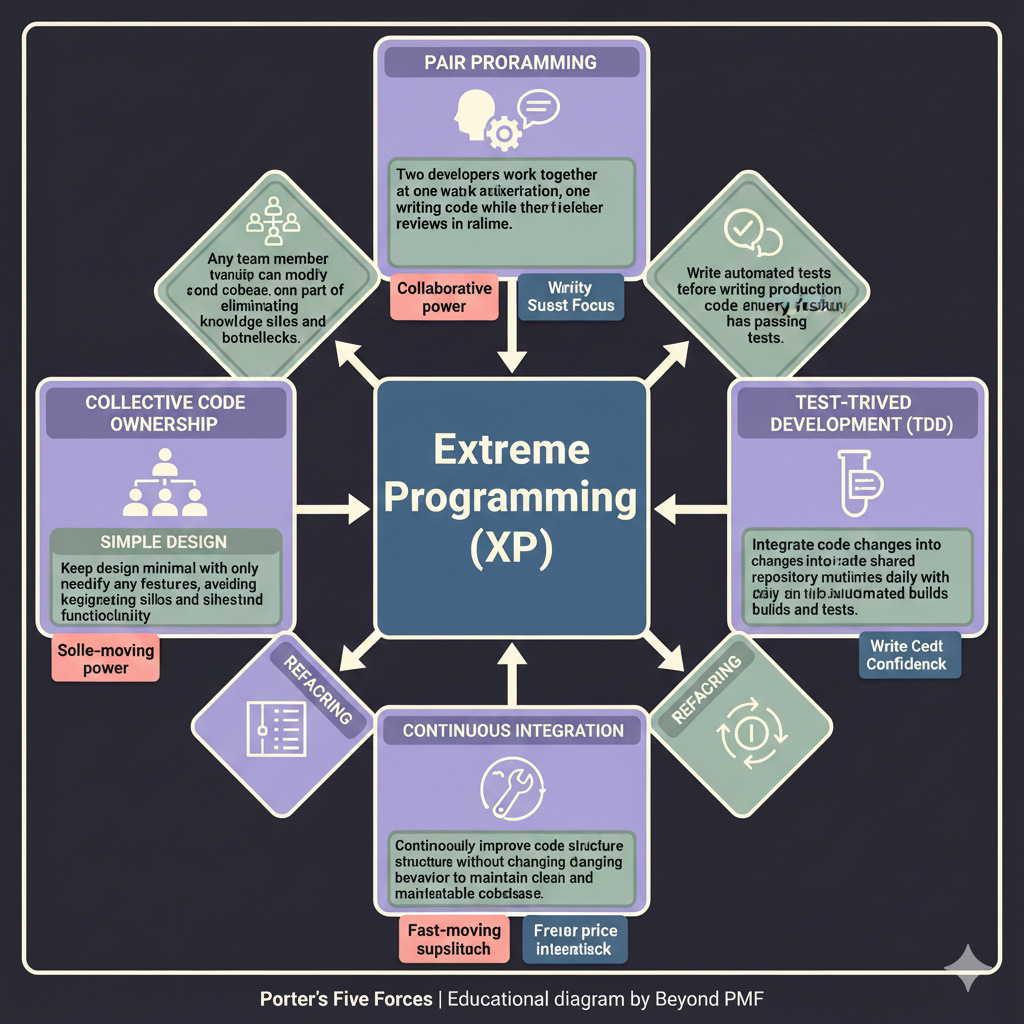
Extreme Programming (XP) is a software development methodology that is intended to improve software quality and responsiveness to changing customer requirements. As a type of agile development, XP advocates frequent releases in short development cycles, which improves productivity and introduces checkpoints where new customer requirements can be adopted. The methodology also promotes teamwork, collaboration, and process adaptability throughout the life-cycle of the project.
Planning: Define user stories and create a release schedule. | Designing: Simplicity is key in design to accommodate changes. | Coding: Code must be written to agreed standards and the pair programming model is often used. | Testing: Developers write unit and acceptance tests to ensure functionality and meet requirements. | Listening: Developers must constantly listen to changing requirements and customer needs. | Refactoring: Continuous improvement of code through refactoring with no changes in functionality.
Implement pair programming to improve code quality and knowledge sharing | Maintain a sustainable pace to prevent team burnout | Use continuous integration to detect and fix problems early
Enhances software quality and flexibility to changes | Promotes teamwork and collaborative work environment | Reduces risks through frequent testing and iterations
Requires commitment to rigorous development practices | Not suitable for remote teams as it emphasizes co-location | Can lead to burnout due to constant iterations and tight schedules
When rapid feedback and frequent delivery are critical | In projects where requirements are expected to change frequently
In large teams where coordination becomes challenging | In projects where detailed documentation is required