
Lean startup frameworks help teams validate product ideas quickly through experiments, MVPs, and validated learning. They reduce the risk of building products without demand by testing assumptions early and often. These frameworks are essential for new ventures and uncertain markets. Use them to reach product‑market fit faster and with less wasted investment.

The A3 Problem Solving framework is a methodical process that helps teams to identify, understand, and solve complex problems in a structured manner. Named after the A3 size paper it traditionally uses, this approach encourages concise documentation and fosters a collaborative approach to problem-solving. It is widely used in environments committed to continuous improvement, such as lean manufacturing, because it helps streamline processes, reduce waste, and involve all team members in problem resolution.
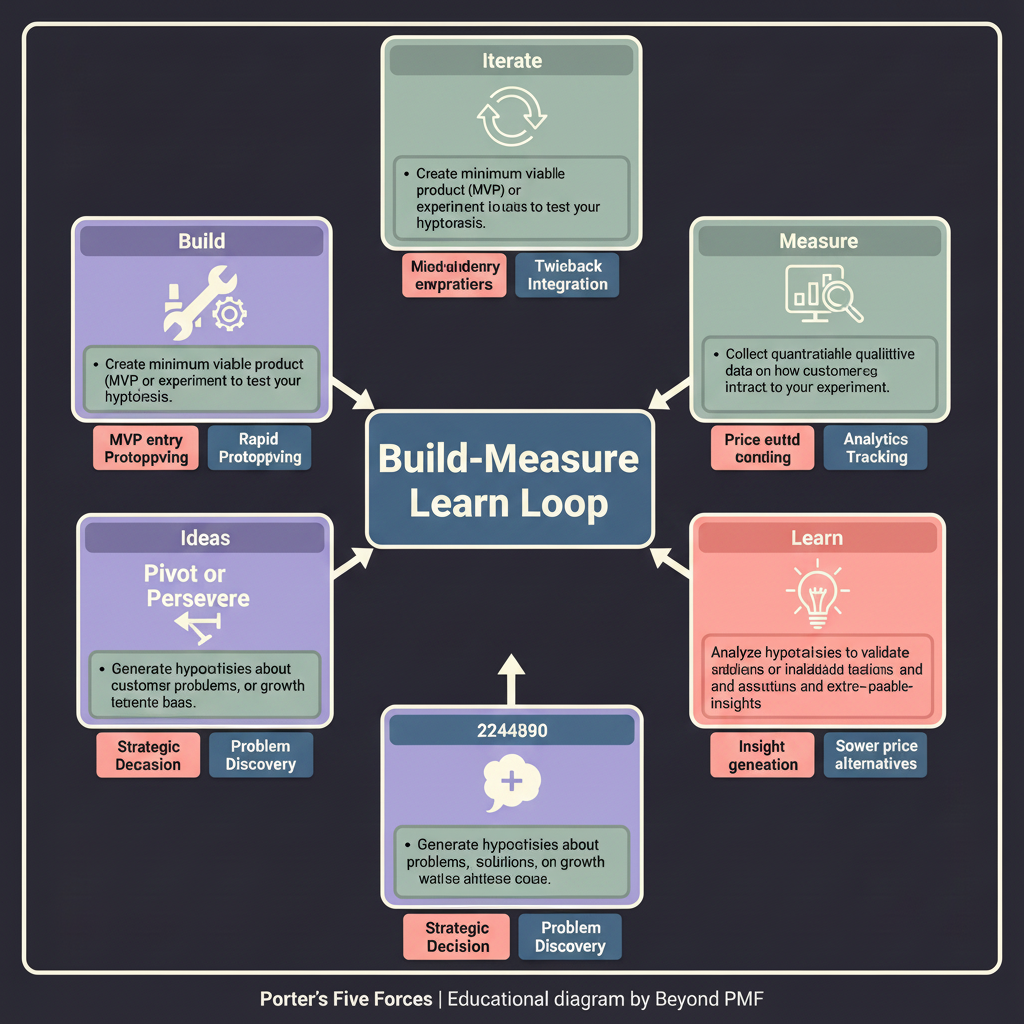
The Build-Measure-Learn Loop is a systematic process used in product development and startup environments to enhance the speed at which a product is developed and refined. It emphasizes building a minimum viable product (MVP), measuring its performance in the market, and learning from the results to make informed decisions. This iterative cycle helps in minimizing the time and resources spent on developing features that do not meet customer needs, thereby increasing the efficiency and effectiveness of development efforts.

The Improvement Kata Framework is a structured approach to problem-solving and continuous improvement. It is based on the principles of lean management and is designed to foster a culture of continuous learning and improvement. The framework guides teams through a series of steps to understand current conditions, define target conditions, identify obstacles, and iteratively work towards goals. Its systematic nature helps organizations develop the skill of working scientifically through challenges.

The Lean Enterprise Framework is an approach used by businesses to maximize customer value while minimizing waste. This framework is rooted in principles of lean management and applies them across the entire organization. It helps companies to streamline operations, enhance product quality, and improve delivery times, all while reducing costs and increasing employee engagement.
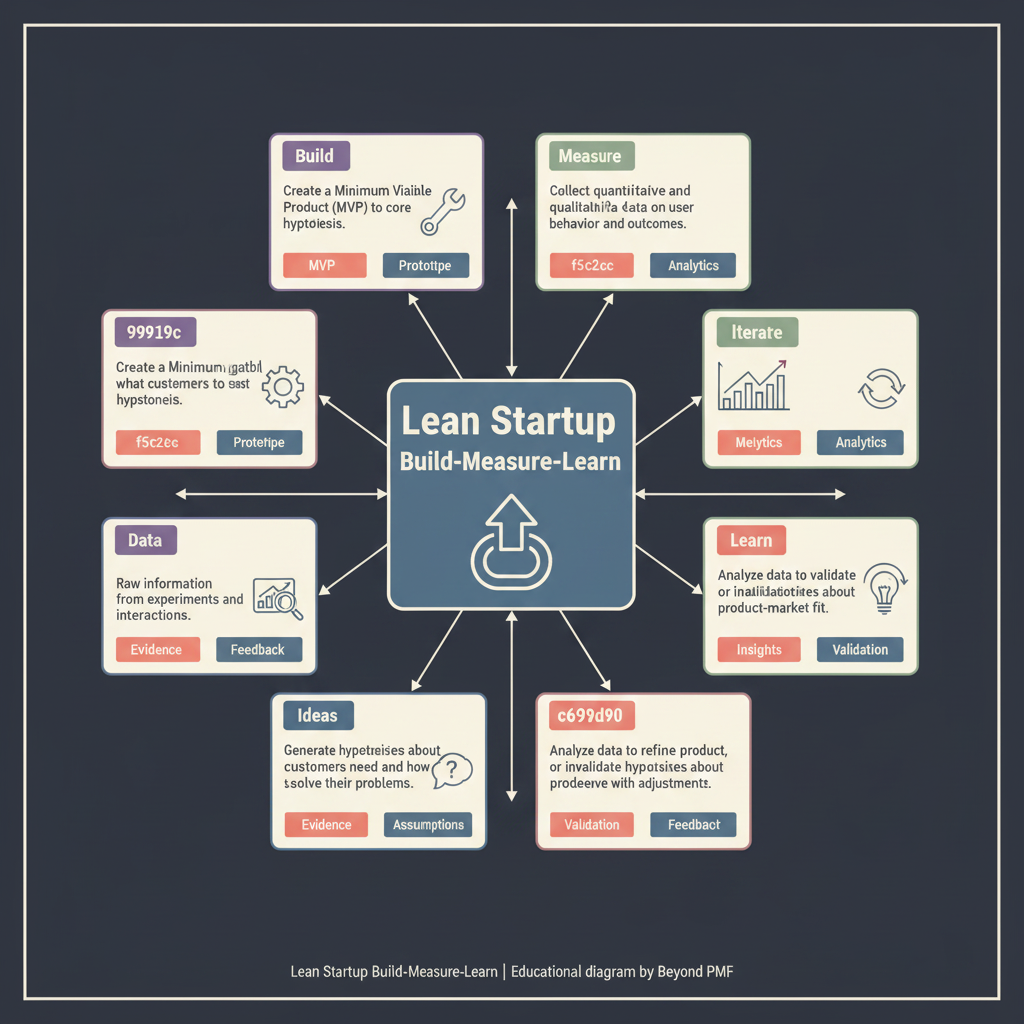
The Lean Startup Build-Measure-Learn framework is a core component of the Lean Startup methodology, which emphasizes rapid prototyping, validated learning, and iterative design to develop products that meet consumer needs more effectively. It encourages startups to invest their time into iteratively building products or services to meet the needs of early customers, thus reducing the market risks and sidestepping the need for large initial funding.

The Lean UX Framework is designed to improve the user experience in an agile development process. It emphasizes collaboration among team members, frequent user feedback, and minimal design. By focusing on the actual experience being designed rather than extensive upfront design documentation, Lean UX allows teams to create more user-centric products quickly and efficiently.

The MVP Definition Canvas is a framework designed to help entrepreneurs and product managers define the core components of a minimal viable product (MVP). It facilitates the identification of the essential features that meet customer needs with the least effort and expense. This framework is crucial for minimizing risk by ensuring that the product has enough features to satisfy early adopters and provide valuable feedback for future development.
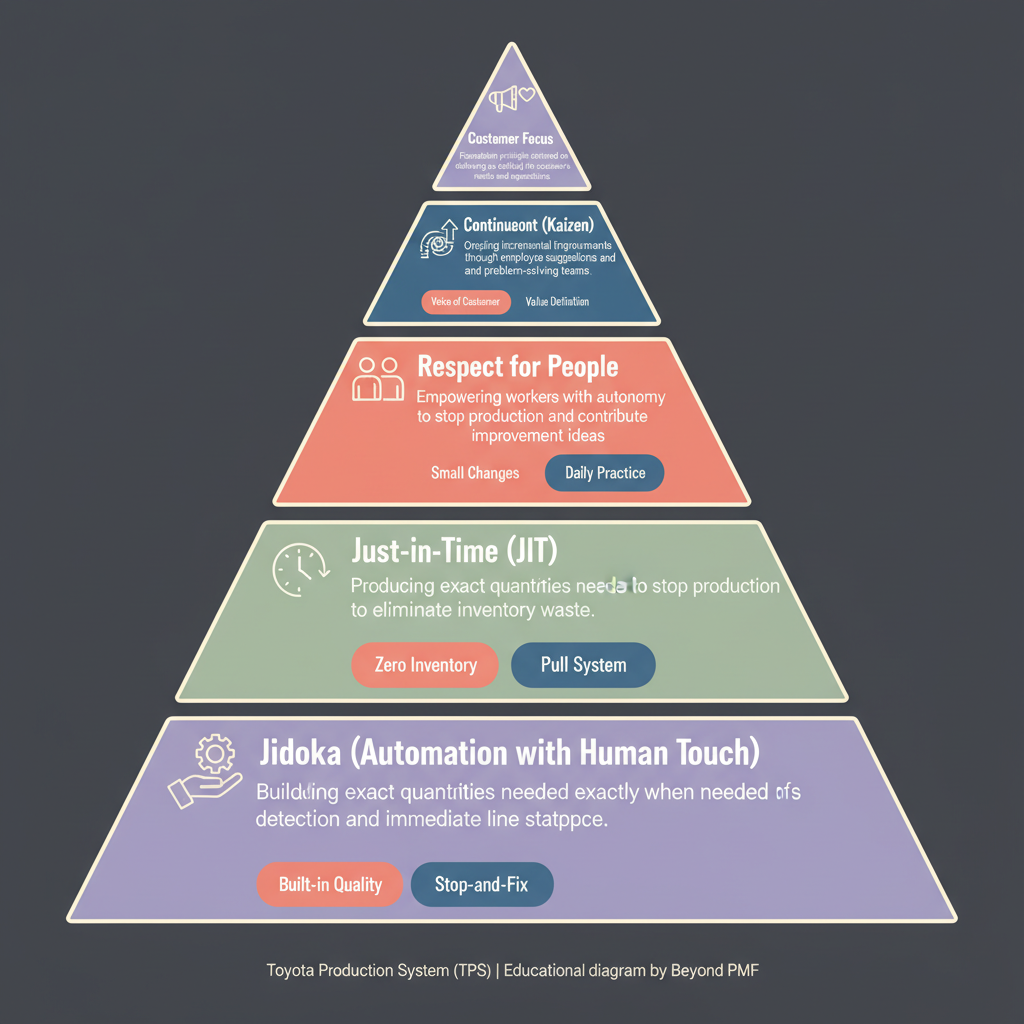
The Toyota Production System (TPS) is a comprehensive production framework developed by Toyota to streamline manufacturing processes, reduce waste, and improve product quality. TPS is grounded in two main concepts: 'Just-in-Time' production, which ensures that parts are only produced as needed, and 'Jidoka', which empowers workers to stop production to fix problems, ensuring quality. The system's focus on continuous improvement (Kaizen) and respect for people has made it influential in lean manufacturing and operational strategies globally.
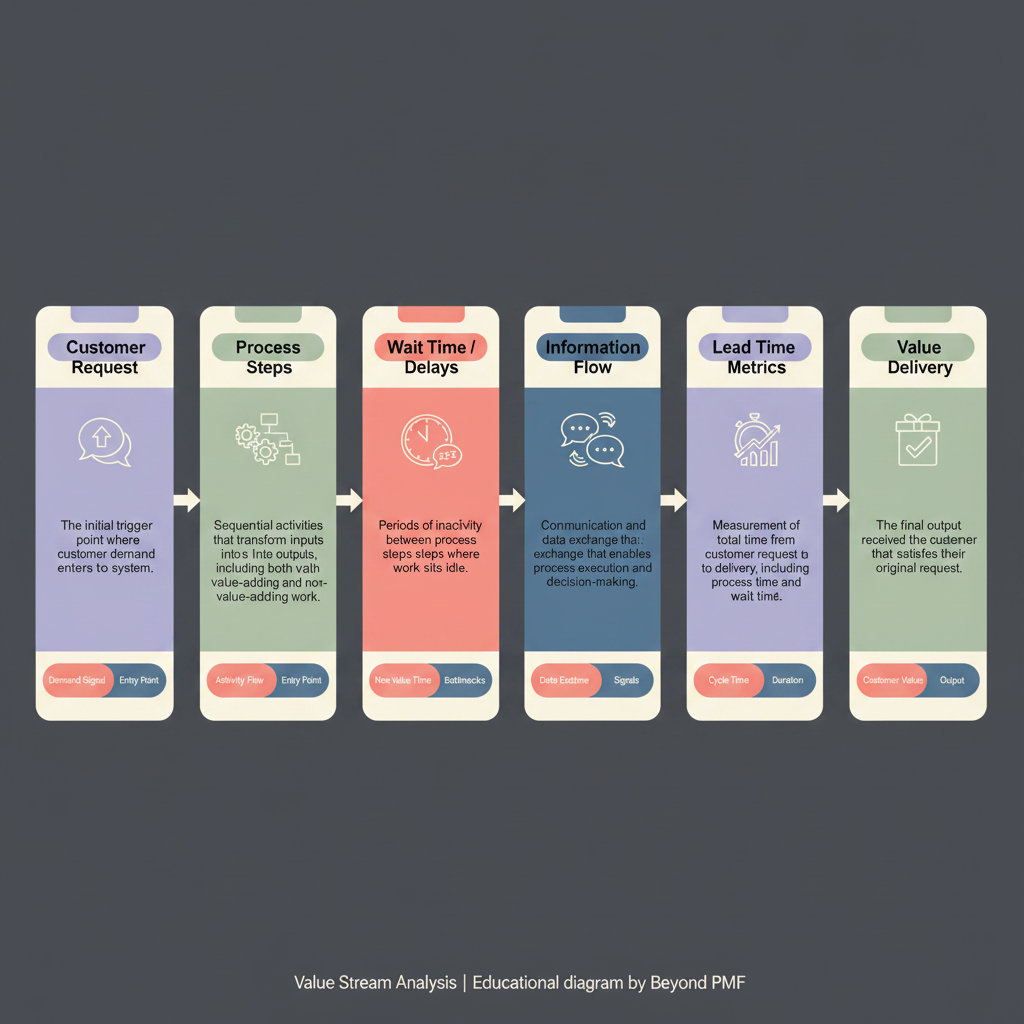
Value Stream Analysis (VSA) is a strategic tool used in lean manufacturing to analyze and design the flow of materials and information required to bring a product or service to a consumer. VSA helps organizations identify waste, reduce process cycle times, and implement process improvement. This analysis not only helps in identifying the inefficiencies but also provides a roadmap for eliminating these inefficiencies and improving the overall performance.

Value Stream Mapping is a lean-management method for analyzing the current state and designing a future state for the series of events that take a product or service from its beginning through to the customer. By using simple diagrams of the flow of materials and information, businesses can observe and understand the entire process and identify areas for improvement. VSM helps in reducing waste, improving efficiency, and ensuring that the value stream flows as smoothly as possible.