
Change management frameworks guide organizations through the behavioral, cultural, and operational shifts required to adopt new strategies, products, or ways of working. They combine rational planning with emotional engagement to reduce resistance and sustain momentum. These frameworks are vital during digital transformations, operating‑model changes, mergers, or large‑scale rollouts. Use them to build buy‑in, shape adoption paths, and anchor new habits that make change stick.
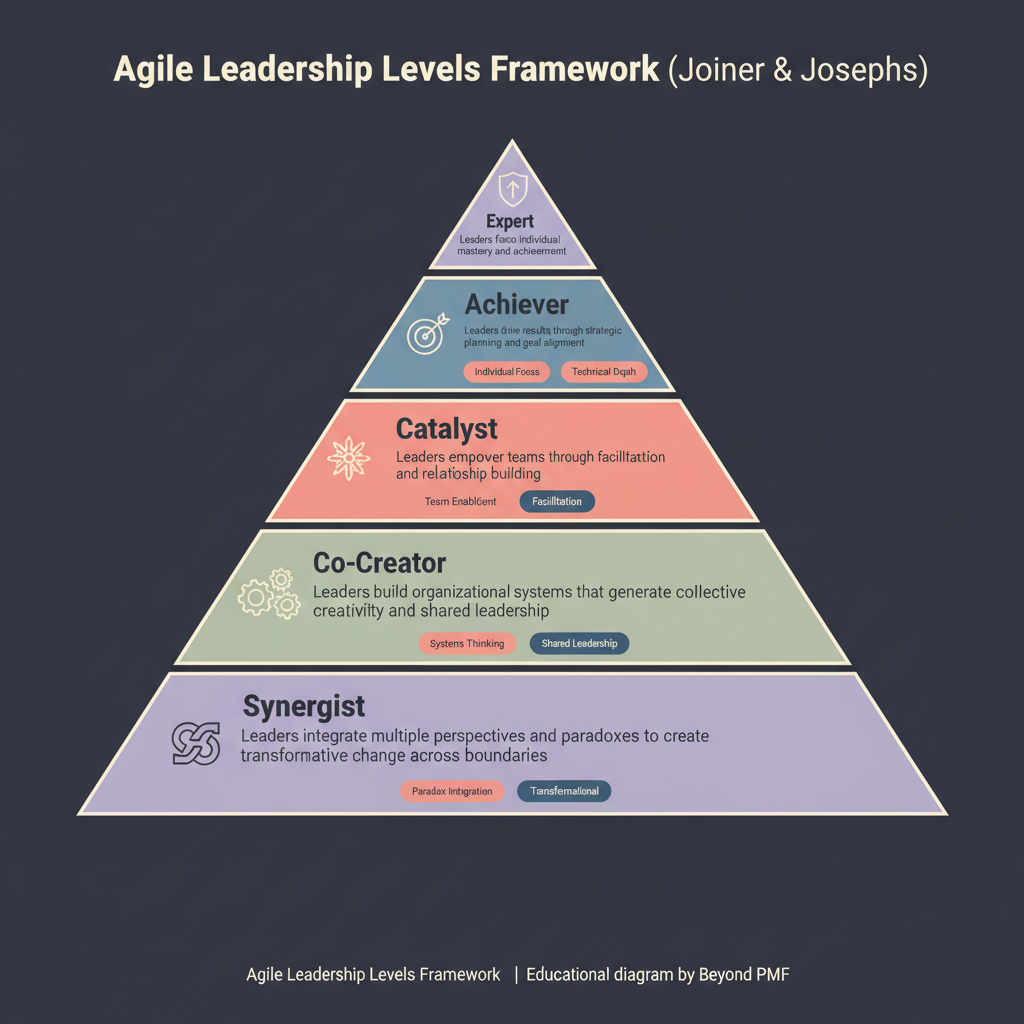
The Agile Leadership Levels Framework, developed by Bill Joiner and Stephen Josephs, is a leadership maturity model that explains how leaders grow their capacity to handle complexity, drive change, and align stakeholders over time.
Rather than focusing on specific agile practices, the framework emphasizes how leaders think, decide, and act under pressure and ambiguity.
The model outlines five progressive leadership levels, each representing a more advanced way of interpreting reality, engaging others, and shaping outcomes. As leaders move through these levels, they become better equipped to navigate organizational friction, conflicting priorities, and systemic challenges — making the framework particularly relevant for agile transformations, digital change initiatives, and strategy execution in complex environments.
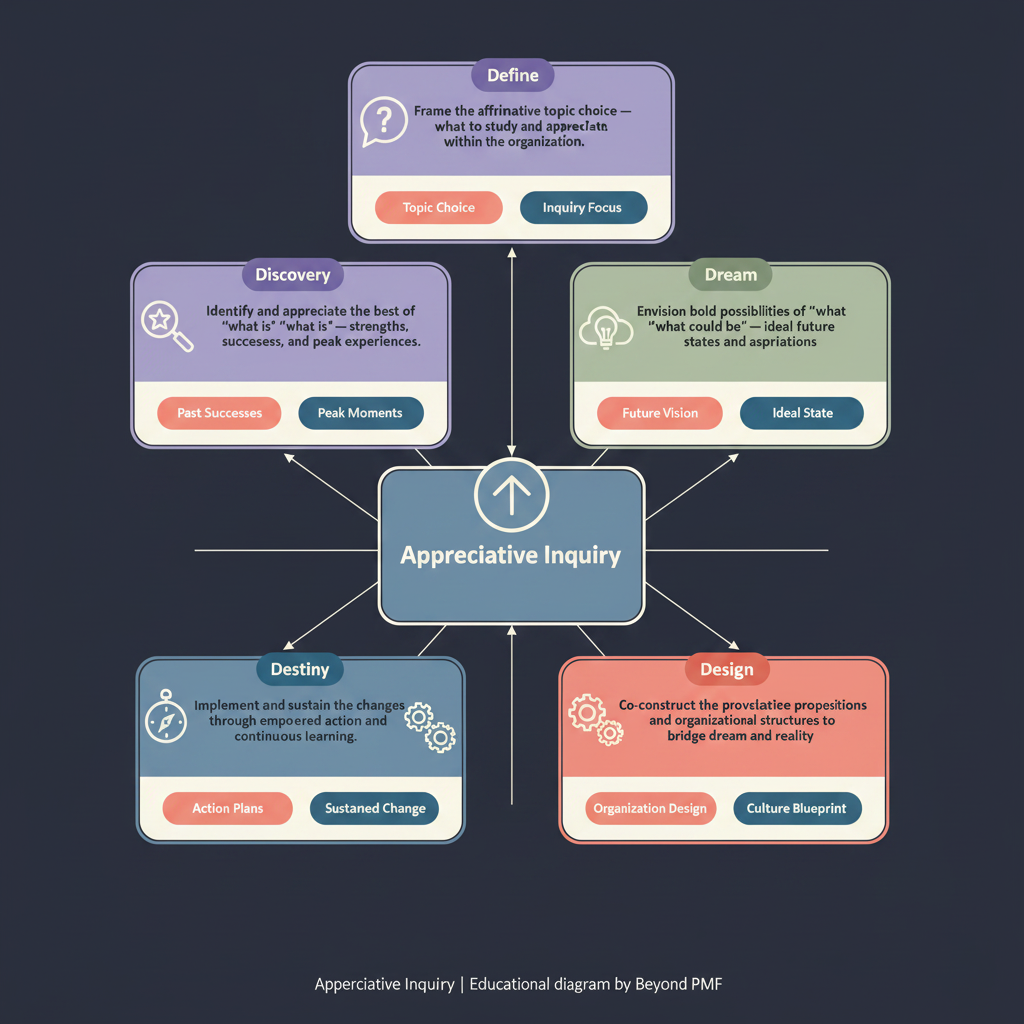
Appreciative Inquiry (AI) is a model that seeks to engage stakeholders in self-determined change. Rather than focusing on negating problems, AI focuses on identifying and leveraging an organization's core strengths. It is used to foster positive development and transformation, encouraging collaborative and participatory processes. This approach helps organizations increase their capacity for positive change and improve their performance by promoting a positive view of the future.

Bridges' Transition Model, developed by William Bridges, focuses on the emotional and psychological impact of change. This model distinguishes between change as a situational shift and transition, which is the internal process people go through to come to terms with a new situation. The framework is beneficial for managing change in a way that considers individual experiences, reducing resistance and enhancing acceptance across an organization.
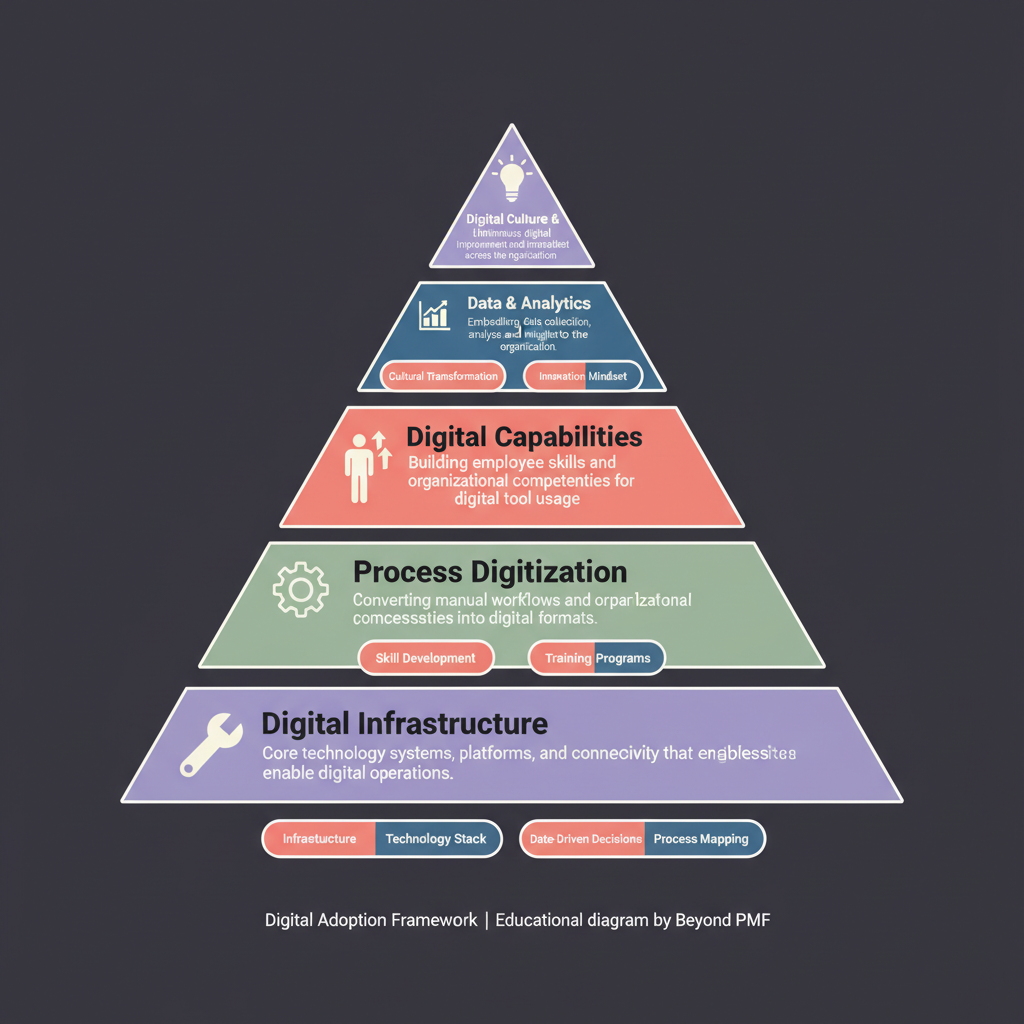
The Digital Adoption Framework is designed to guide organizations through the successful implementation and utilization of digital technologies. It focuses on integrating digital tools seamlessly into business processes to enhance efficiency and productivity. The framework helps identify barriers to digital adoption, strategizes on overcoming these obstacles, and ensures that all levels of the organization are equipped to use the digital tools effectively. The ultimate goal is to achieve digital fluency across the organization, leading to improved performance and competitive advantage.

Kotter's 8-Step Model, developed by Harvard Business School Professor John Kotter, is a methodological approach used by businesses to effect change and embed new practices within an organization. It provides a step-by-step process that aims to overcome obstacles like resistance to change and lack of acceptance. The model emphasizes the importance of a clear vision, effective communication, and the empowerment of employees to achieve sustainable change.

Lewin's Unfreeze-Change-Refreeze framework is a simple yet powerful tool for understanding the process of organizational change. It was developed by Kurt Lewin in the 1940s and is structured around three stages: unfreezing the current state, making the change, and refreezing to stabilize the new state. This framework helps organizations prepare for change, manage the transition smoothly, and ensure that the change is sustainable over time.