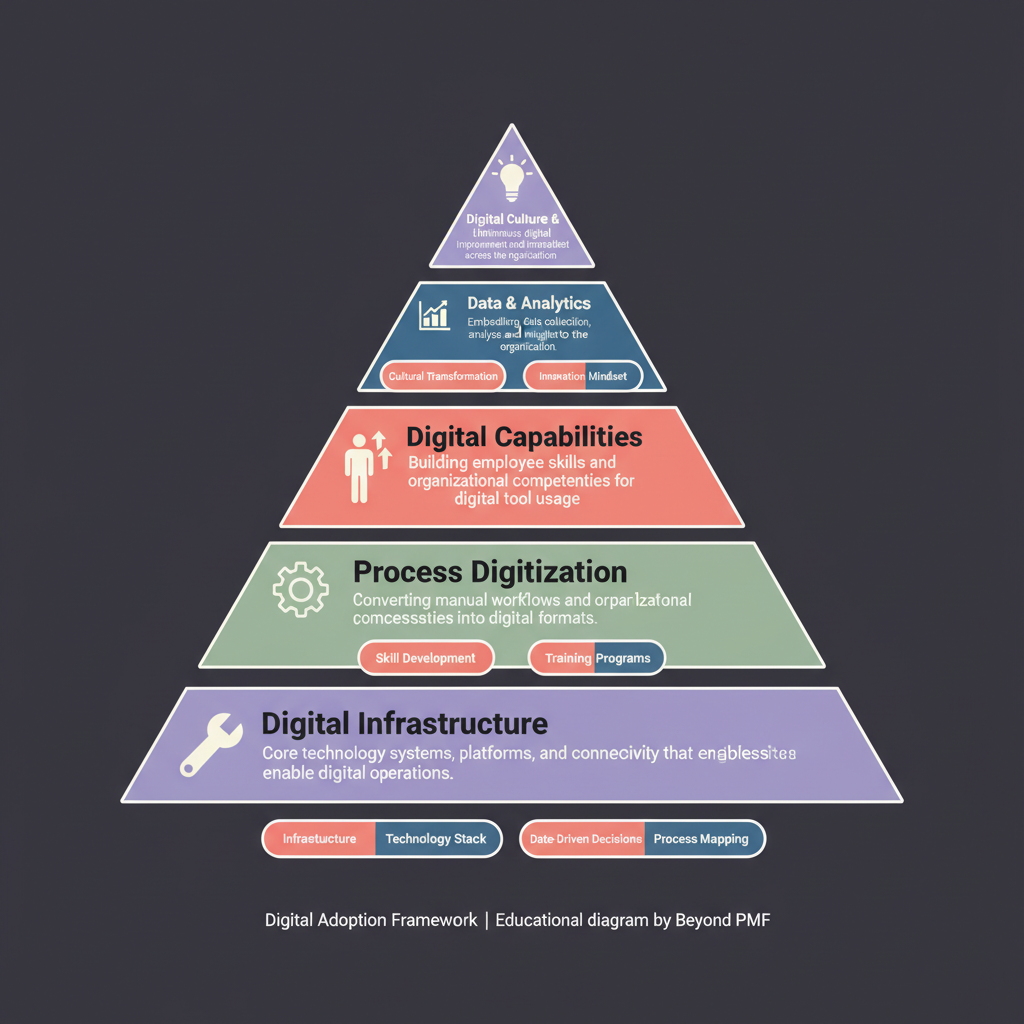
Digital Adoption Framework

https://ik.imagekit.io/beyondpmf/frameworks/digital-adoption-framework.png
The Digital Adoption Framework focuses on maximizing the use of digital tools, which inherently involves the implementation and usability of those tools. Poor adoption often stems from issues in implementation, technical friction, or user experience challenges with the digital tools.

The Digital Adoption Framework is designed to guide organizations through the successful implementation and utilization of digital technologies. It focuses on integrating digital tools seamlessly into business processes to enhance efficiency and productivity. The framework helps identify barriers to digital adoption, strategizes on overcoming these obstacles, and ensures that all levels of the organization are equipped to use the digital tools effectively. The ultimate goal is to achieve digital fluency across the organization, leading to improved performance and competitive advantage.

Steps / Detailed Description

Assess current digital maturity and identify gaps. | Define clear digital adoption goals aligned with business objectives. | Develop a tailored adoption strategy that includes training and support structures. | Implement the strategy with continuous monitoring and feedback loops. | Evaluate the impact of digital adoption and adjust strategies as necessary.

Best Practices

Engage stakeholders at all levels early in the process. | Provide comprehensive training and support to all users. | Regularly review and update digital tools and strategies.

Pros

Increases operational efficiency through optimized use of digital tools. | Enhances employee proficiency and satisfaction with digital technologies. | Improves overall organizational performance and competitiveness.

Cons

Can be resource-intensive in terms of time, money, and training. | Resistance to change among employees can hinder implementation. | Requires continuous adaptation and updates to keep pace with technological advancements.

When to Use

When implementing new digital tools or platforms within an organization. | When upgrading existing digital technology to enhance business processes.

When Not to Use

When the organization lacks the resources to support a comprehensive adoption process. | When there is no clear alignment between digital tools and business objectives.

Related Frameworks

Lifecycle

Not tied to a specific lifecycle stage

Scope

Scope not defined

Maturity Level

Maturity level not specified

Time to Implement

2–4 Weeks
3–6 Months
1–2 Weeks
3–6 Months
1–2 Months
3–6 Months
1–2 Weeks
Less Than 1 Day
1–2 Weeks
Longer Than 6 Months
1–2 Weeks
Longer Than 6 Months
1–2 Weeks
3–6 Months
1–2 Weeks
1–2 Weeks
1–2 Weeks
1–2 Weeks
1–2 Days
1–2 Weeks
1–2 Weeks
1–2 Weeks
1–2 Weeks
1–2 Weeks
1–2 Weeks
3–6 Months
1–2 Weeks
1–2 Weeks
1–2 Weeks
3–6 Months
1–2 Weeks
1–2 Weeks
2–4 Weeks
1–2 Weeks
1–2 Days
1–2 Weeks
Longer Than 6 Months
3–6 Months
Longer Than 6 Months
1–2 Weeks
Longer Than 6 Months
3–6 Months
Less Than 1 Day
3–6 Months
1–2 Months
3–6 Months
Longer Than 6 Months
3–6 Months
Less Than 1 Day
1–2 Weeks
3–6 Months
3–6 Months
1–2 Weeks
3–6 Months
1–2 Weeks
1–2 Weeks
1–2 Days
1–2 Weeks
1–2 Months
Longer Than 6 Months
1–2 Weeks
Longer Than 6 Months
1–2 Weeks
3–6 Months
1–2 Weeks
Less Than 1 Day
1–2 Weeks
3–6 Months
1–2 Weeks
3–6 Months
1–2 Weeks
1–2 Weeks
Longer Than 6 Months
Less Than 1 Day
3–6 Months
Longer Than 6 Months
1–2 Months
1–2 Weeks
Longer Than 6 Months
1–2 Weeks
3–6 Months
1–2 Weeks
1–2 Weeks
3–6 Months
Less Than 1 Day
1–2 Weeks
1–2 Weeks
3–6 Months
3–6 Months
Less Than 1 Day
1–2 Weeks
Longer Than 6 Months
1–2 Months
1–2 Weeks
1–2 Weeks
1–2 Weeks
Longer Than 6 Months

Copyright Information

Autor:
Unknown
N/A
Publication:
Unknown