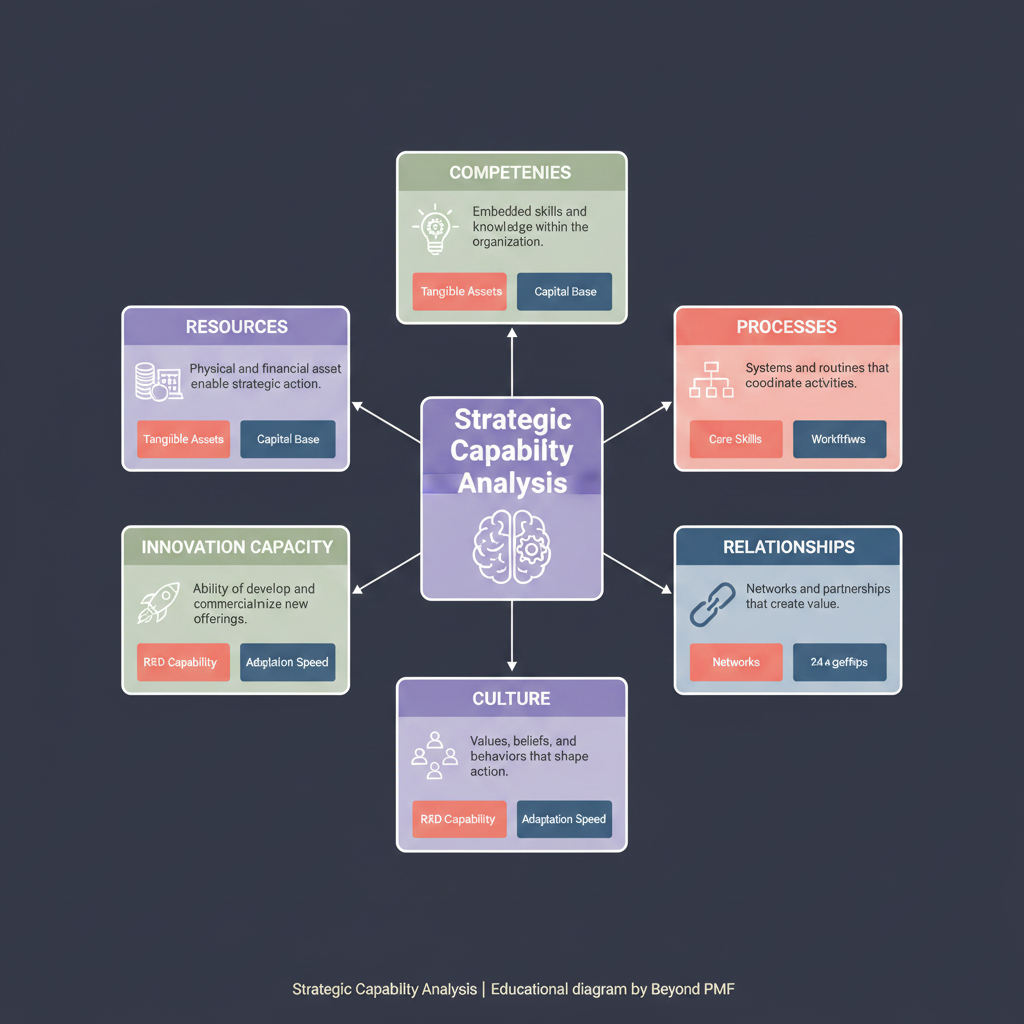
Strategic Capability Analysis

https://ik.imagekit.io/beyondpmf/frameworks/strategic-capability-analysis.png
Strategic Capability Analysis directly addresses the alignment of internal resources and capabilities with the overall strategic direction of the company. It helps identify gaps between current capabilities and the requirements of the chosen strategy, addressing a lack of market alignment and potentially unclear direction.

Strategic Capability Analysis is a comprehensive framework designed to evaluate the internal capabilities of an organization in relation to its strategic goals. It helps businesses identify key resources and competencies that provide a competitive advantage, while also pinpointing areas that require improvement or realignment. This analysis is crucial for aligning organizational capabilities with market demands and strategic objectives, thereby enhancing overall performance and competitiveness.

Steps / Detailed Description

Identify strategic objectives: Define what the organization aims to achieve in the long term. | Assess existing capabilities: Evaluate current resources, skills, and competencies. | Determine capability gaps: Identify discrepancies between current capabilities and those needed to achieve strategic goals. | Develop enhancement strategies: Plan how to enhance capabilities through training, recruitment, or acquisitions. | Implement changes: Execute the strategies to enhance capabilities. | Monitor and adjust: Regularly review the capabilities against strategic goals and make necessary adjustments.

Best Practices

Regularly update the analysis to reflect changes in the business environment | Involve stakeholders from various departments for comprehensive insights | Use quantitative and qualitative data for a balanced analysis

Pros

Enhances strategic alignment | Identifies competitive advantages | Facilitates targeted resource allocation

Cons

Can be time-consuming | Requires detailed and accurate data | May overlook external factors

When to Use

During strategic planning sessions | When entering new markets or launching new products

When Not to Use

In highly unstable or unpredictable market conditions | When immediate decisions are required without time for thorough analysis

Related Frameworks

Categories

Lifecycle

Not tied to a specific lifecycle stage

Scope

Scope not defined

Maturity Level

Maturity level not specified

Time to Implement

2–4 Weeks
3–6 Months
1–2 Weeks
3–6 Months
1–2 Months
3–6 Months
1–2 Weeks
Less Than 1 Day
1–2 Weeks
Longer Than 6 Months
1–2 Weeks
Longer Than 6 Months
1–2 Weeks
3–6 Months
1–2 Weeks
1–2 Weeks
1–2 Weeks
1–2 Weeks
1–2 Days
1–2 Weeks
1–2 Weeks
1–2 Weeks
1–2 Weeks
1–2 Weeks
1–2 Weeks
3–6 Months
1–2 Weeks
1–2 Weeks
1–2 Weeks
3–6 Months
1–2 Weeks
1–2 Weeks
2–4 Weeks
1–2 Weeks
1–2 Days
1–2 Weeks
Longer Than 6 Months
3–6 Months
Longer Than 6 Months
1–2 Weeks
Longer Than 6 Months
3–6 Months
Less Than 1 Day
3–6 Months
1–2 Months
3–6 Months
Longer Than 6 Months
3–6 Months
Less Than 1 Day
1–2 Weeks
3–6 Months
3–6 Months
1–2 Weeks
3–6 Months
1–2 Weeks
1–2 Weeks
1–2 Days
1–2 Weeks
1–2 Months
Longer Than 6 Months
1–2 Weeks
Longer Than 6 Months
1–2 Weeks
3–6 Months
1–2 Weeks
Less Than 1 Day
1–2 Weeks
3–6 Months
1–2 Weeks
3–6 Months
1–2 Weeks
1–2 Weeks
Longer Than 6 Months
Less Than 1 Day
3–6 Months
Longer Than 6 Months
1–2 Months
1–2 Weeks
Longer Than 6 Months
1–2 Weeks
3–6 Months
1–2 Weeks
1–2 Weeks
3–6 Months
Less Than 1 Day
1–2 Weeks
1–2 Weeks
3–6 Months
3–6 Months
Less Than 1 Day
1–2 Weeks
Longer Than 6 Months
1–2 Months
1–2 Weeks
1–2 Weeks
1–2 Weeks
Longer Than 6 Months

Copyright Information

Autor:
Unknown
N/A
Publication:
Generic Business Tool