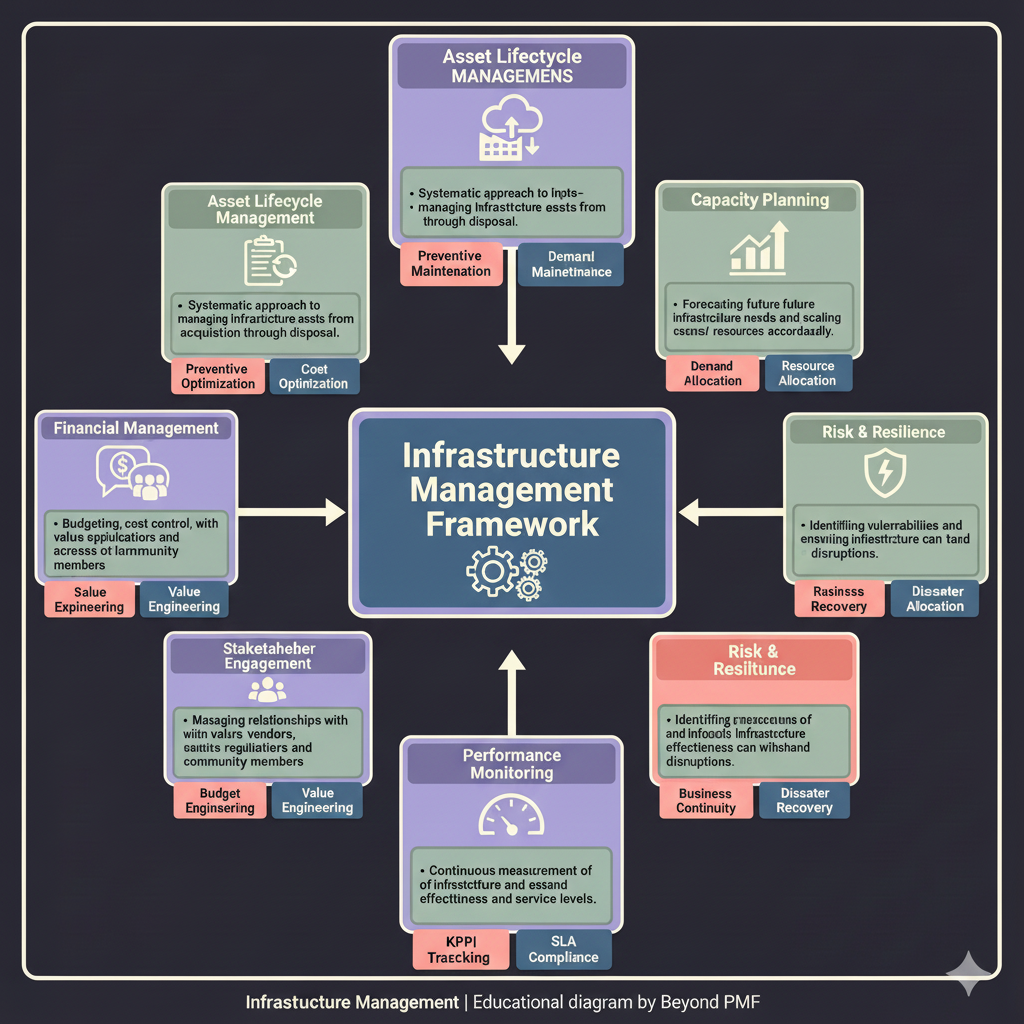
Infrastructure Management Framework

https://ik.imagekit.io/beyondpmf/frameworks/infrastructure-management-framework.png
The Infrastructure Management Framework primarily addresses the operational friction related to managing essential components. This includes streamlining processes, coordinating resources, and establishing governance for operational efficiency. It focuses on the day-to-day workings of the organization's infrastructure.

The Infrastructure Management Framework provides organizations with a structured method to manage their infrastructure efficiently. It encompasses the overall management of essential operational components, including policies, processes, equipment, data, and human resources. The framework aims to ensure that all elements of the infrastructure are effectively aligned to support the organization's overall strategy and objectives. This alignment helps in optimizing performance, reducing costs, and enhancing the reliability and security of infrastructure assets.

Steps / Detailed Description

Assessment of Current Infrastructure: Evaluate the existing infrastructure to identify strengths, weaknesses, and areas for improvement. | Planning and Strategy Development: Develop strategic plans that align with organizational goals and outline the necessary steps to achieve desired infrastructure states. | Implementation of Policies and Procedures: Establish and implement policies and procedures to manage the infrastructure effectively. | Monitoring and Continuous Improvement: Regularly monitor the infrastructure's performance and implement improvements as needed to enhance efficiency and reliability.

Best Practices

Regularly update documentation and policies to reflect current practices | Invest in training for staff to ensure proper implementation of the framework | Utilize technology to automate and streamline infrastructure management processes

Pros

Improves efficiency and reliability of infrastructure | Reduces operational costs through optimized resource management | Enhances strategic alignment of infrastructure with organizational goals

Cons

Can be resource-intensive to implement and maintain | Requires continuous updating and adaptation to new technologies | Potential resistance to change within the organization

When to Use

When overhauling existing infrastructure | During periods of organizational growth or scaling

When Not to Use

In very small organizations where the cost and complexity may outweigh the benefits | When immediate, short-term infrastructure solutions are required

Related Frameworks

Lifecycle

Not tied to a specific lifecycle stage

Scope

Scope not defined

Maturity Level

Maturity level not specified

Time to Implement

2–4 Weeks
3–6 Months
1–2 Weeks
3–6 Months
1–2 Months
3–6 Months
1–2 Weeks
Less Than 1 Day
1–2 Weeks
Longer Than 6 Months
1–2 Weeks
Longer Than 6 Months
1–2 Weeks
3–6 Months
1–2 Weeks
1–2 Weeks
1–2 Weeks
1–2 Weeks
1–2 Days
1–2 Weeks
1–2 Weeks
1–2 Weeks
1–2 Weeks
1–2 Weeks
1–2 Weeks
3–6 Months
1–2 Weeks
1–2 Weeks
1–2 Weeks
3–6 Months
1–2 Weeks
1–2 Weeks
2–4 Weeks
1–2 Weeks
1–2 Days
1–2 Weeks
Longer Than 6 Months
3–6 Months
Longer Than 6 Months
1–2 Weeks
Longer Than 6 Months
3–6 Months
Less Than 1 Day
3–6 Months
1–2 Months
3–6 Months
Longer Than 6 Months
3–6 Months
Less Than 1 Day
1–2 Weeks
3–6 Months
3–6 Months
1–2 Weeks
3–6 Months
1–2 Weeks
1–2 Weeks
1–2 Days
1–2 Weeks
1–2 Months
Longer Than 6 Months
1–2 Weeks
Longer Than 6 Months
1–2 Weeks
3–6 Months
1–2 Weeks
Less Than 1 Day
1–2 Weeks
3–6 Months
1–2 Weeks
3–6 Months
1–2 Weeks
1–2 Weeks
Longer Than 6 Months
Less Than 1 Day
3–6 Months
Longer Than 6 Months
1–2 Months
1–2 Weeks
Longer Than 6 Months
1–2 Weeks
3–6 Months
1–2 Weeks
1–2 Weeks
3–6 Months
Less Than 1 Day
1–2 Weeks
1–2 Weeks
3–6 Months
3–6 Months
Less Than 1 Day
1–2 Weeks
Longer Than 6 Months
1–2 Months
1–2 Weeks
1–2 Weeks
1–2 Weeks
Longer Than 6 Months

Copyright Information

Autor:
Unknown
N/A
Publication:
Generic Business Tool