
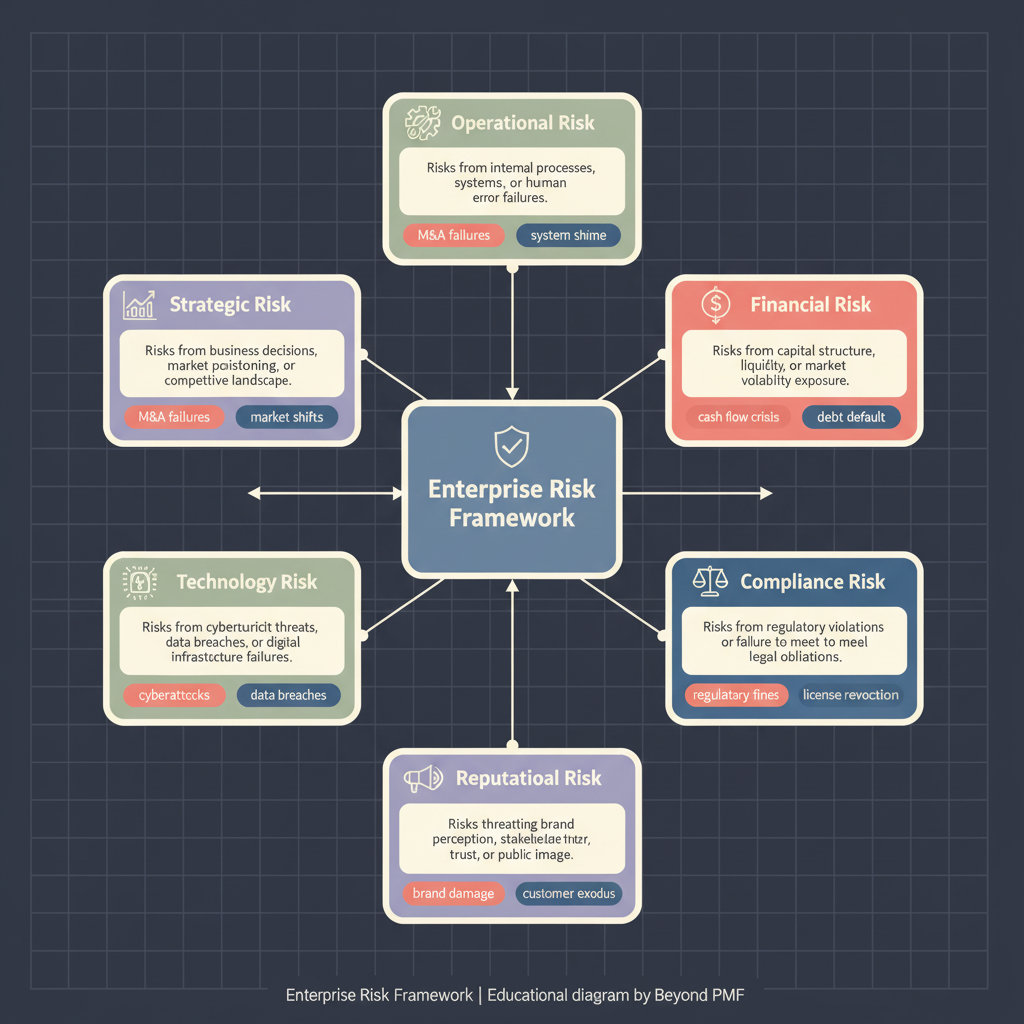
The Enterprise Risk Framework is a structured methodology used by organizations to manage risks that could impact their strategic objectives and operational efficiency. It involves identifying potential risks, assessing their likelihood and impact, prioritizing them based on their severity, and implementing strategies to mitigate or manage these risks. The framework helps organizations to proactively manage uncertainties and capitalize on opportunities, thereby enhancing resilience and value creation.
Identify potential risks: Gather information to identify internal and external risks that could affect the organization. | Assess risks: Evaluate the likelihood and impact of each identified risk using qualitative and quantitative methods. | Prioritize risks: Rank risks based on their potential impact and likelihood to determine focus areas for risk management. | Develop risk responses: Formulate strategies to mitigate, transfer, accept, or avoid identified risks. | Implement risk management strategies: Execute the planned responses and allocate resources to manage risks effectively. | Monitor and review: Regularly review risk management processes and adjust strategies based on new information and changing conditions.
Engage all levels of the organization in the risk management process | Use a combination of qualitative and quantitative risk assessment tools | Regularly update risk assessments to reflect changing conditions
Enhances strategic decision-making | Improves organizational resilience | Facilitates compliance with legal and regulatory requirements
Can be resource-intensive | Requires continuous updating and monitoring | Potential for complexity in large organizations
When setting new strategic goals | In preparation for major organizational changes
For immediate crisis management | When the organization lacks resources to conduct thorough risk assessment