
Discovery frameworks structure how teams explore problems, test assumptions, and identify the highest‑value opportunities before committing to delivery. They combine qualitative research with quantitative signals to reduce uncertainty early. These approaches are vital for avoiding waste and improving learning velocity. Use them to increase confidence in roadmap bets and connect work to real customer value.
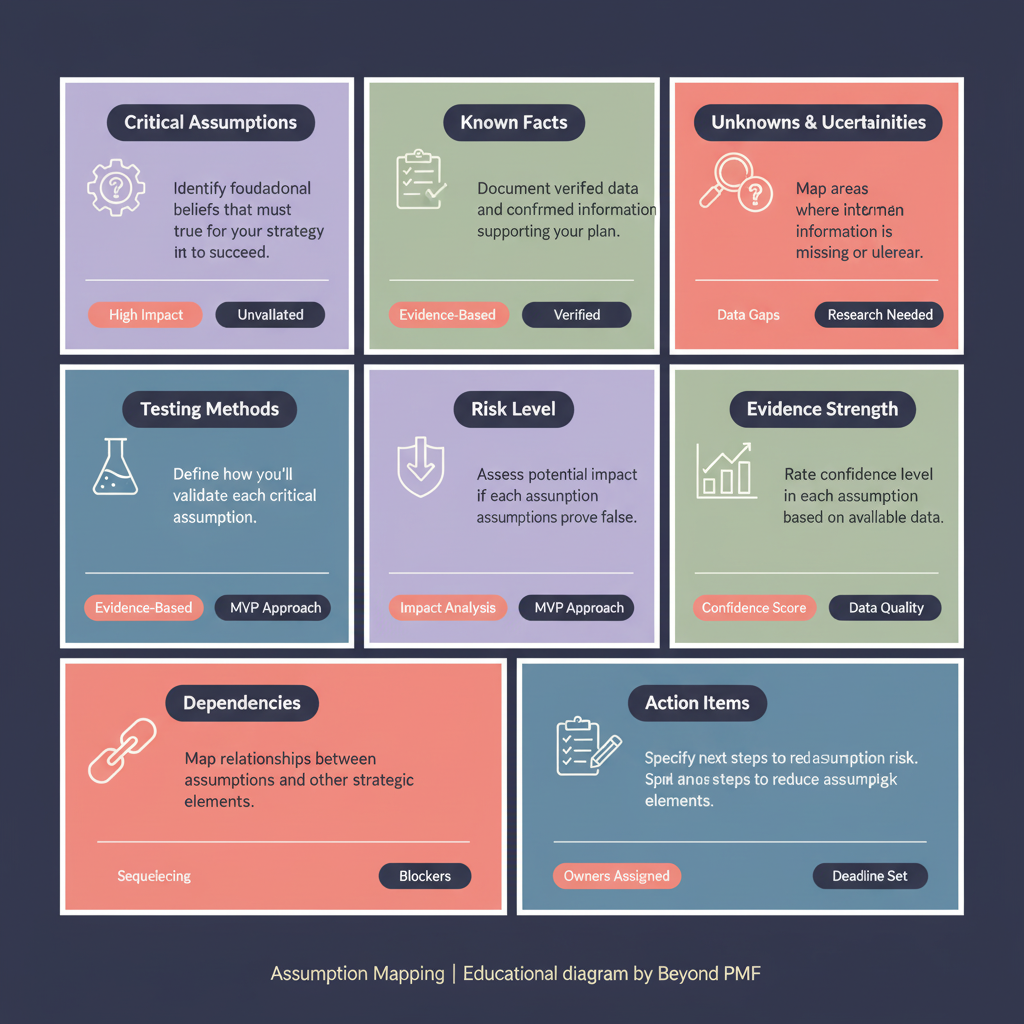
Assumption Mapping is a framework that helps teams and individuals identify, prioritize, and test the assumptions underlying their projects or business strategies. By mapping out these assumptions, teams can focus on validating the most critical and uncertain ones first, reducing risk and increasing the likelihood of success. This approach is particularly beneficial in environments where information is incomplete or ambiguous, enabling more informed decision-making and resource allocation.
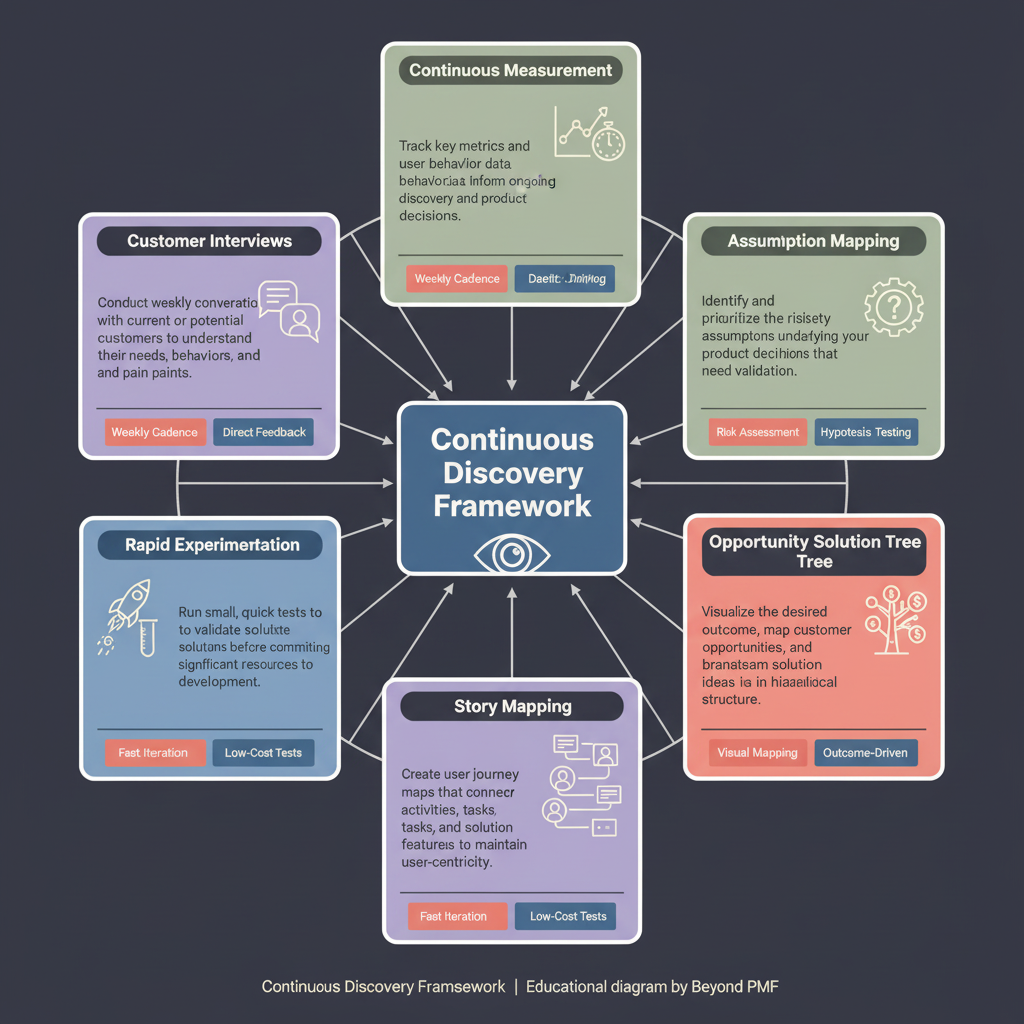
The Continuous Discovery Framework is a modern approach used in product management that integrates regular customer feedback into the product development process. This framework encourages teams to continuously engage with customers through interviews, usability tests, and other feedback mechanisms to gather insights that inform product decisions. The goal is to reduce risks associated with product development by ensuring that the product evolves based on actual user needs and behaviors, thus increasing the likelihood of success in the market.
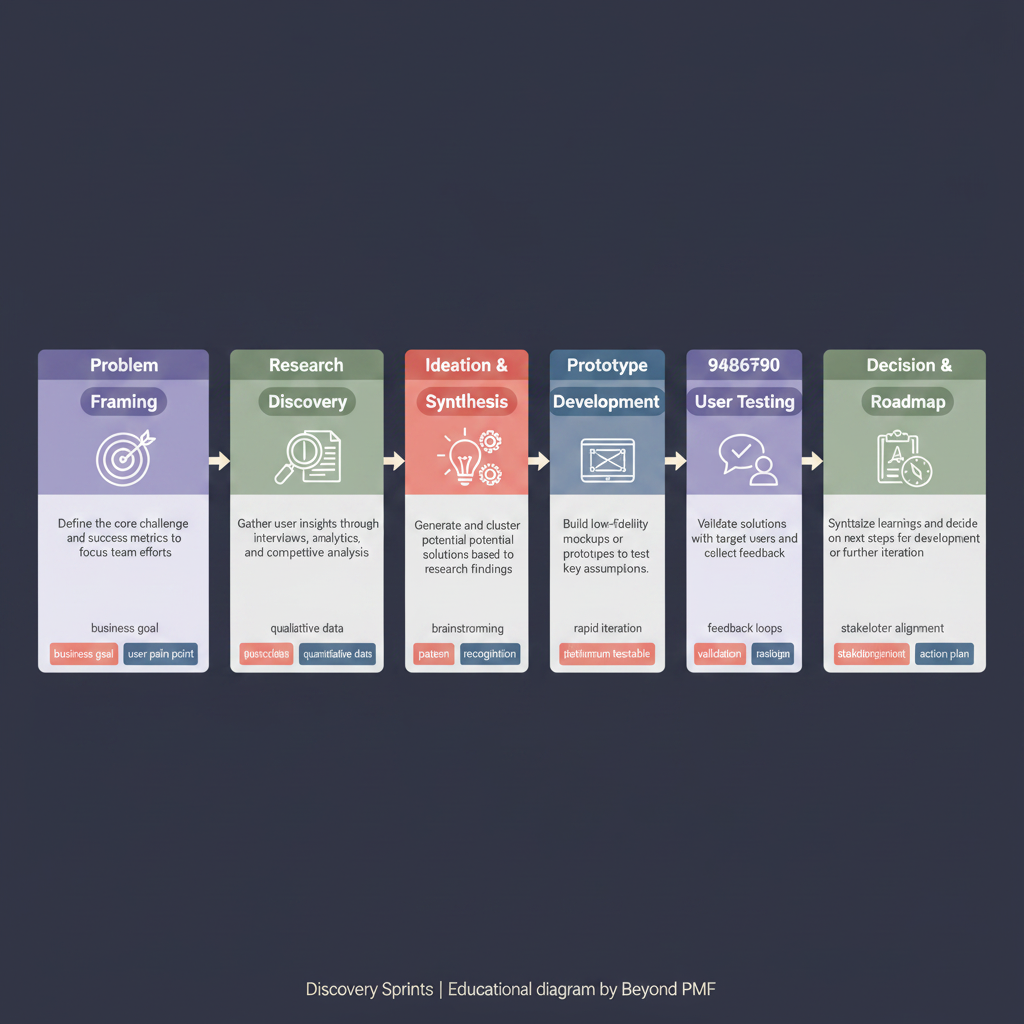
Discovery Sprints are a framework used to rapidly explore and validate ideas, products, or services within a short timeframe, typically one to two weeks. This approach is rooted in design thinking and agile methodologies, focusing on collaborative and cross-functional team efforts to ideate, prototype, and test solutions. The primary benefits include accelerated learning, reduced risk, and focused alignment across team members, leading to more informed decision-making.