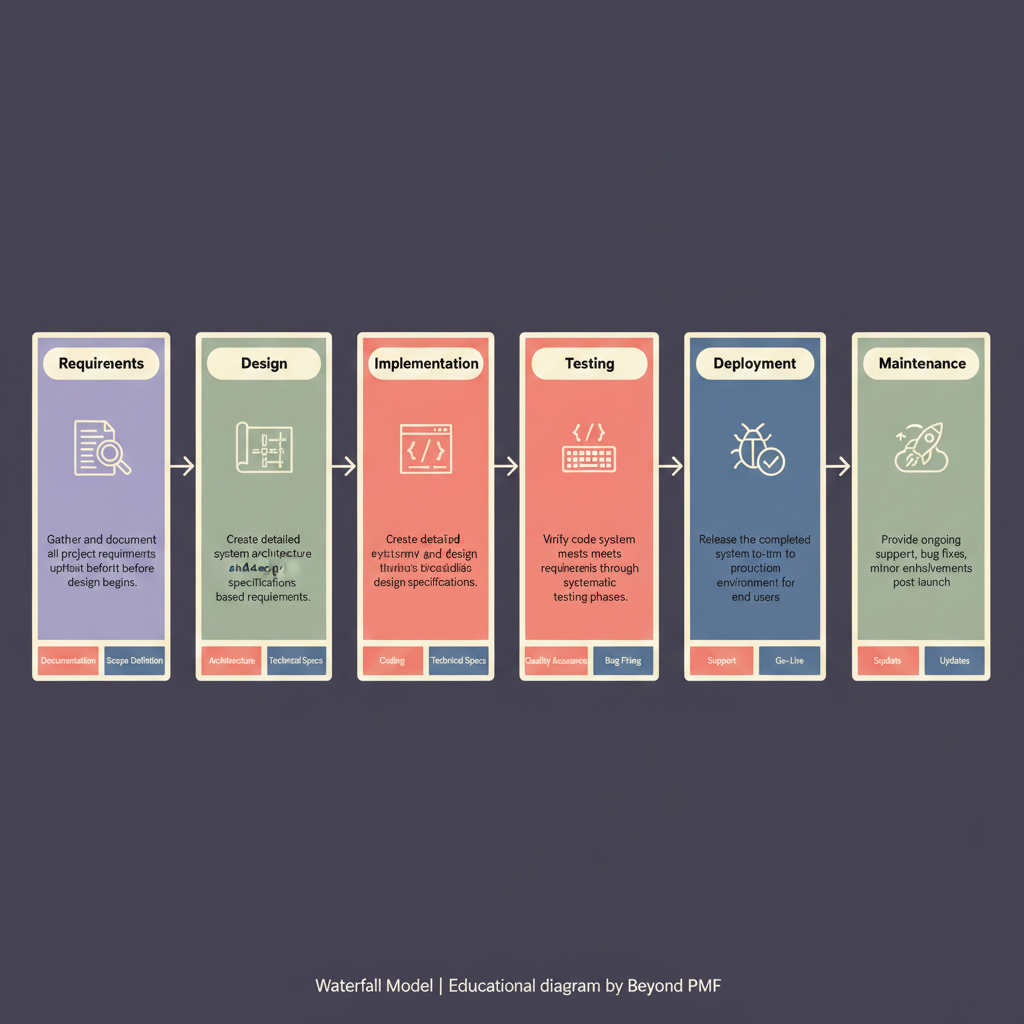
The Waterfall Model is a linear and sequential approach to software development and project management, characterized by a series of distinct phases that flow downwards like a waterfall. Each phase must be completed before the next begins, with little to no overlap between phases. This model is used because of its simplicity and ease of understanding, making it suitable for projects with clear objectives and stable requirements. It is beneficial for its ability to enforce discipline, meticulous record-keeping, and thorough documentation.
Requirement Gathering and Documentation: Define project goals, specifications, and requirements clearly. | System Design: Translate requirements into a software architecture. | Implementation: Code the software according to the design documents. | Integration and Testing: Combine and test the system for defects. | Deployment: Release the fully tested software to the market. | Maintenance: Update and fix the software as needed post-deployment.
Ensure clear, detailed, and agreed-upon requirements | Maintain comprehensive documentation at each phase | Plan for potential risks and incorporate risk management strategies
Simple and easy to understand and use | Structured and disciplined approach | Facilitates meticulous documentation
Inflexible, as it is difficult to go back to any stage after it is completed | Poor adaptability to changing requirements | High risk and uncertainty in integration stage
Projects with clear, fixed requirements | Projects where a structured approach is paramount
Projects that are likely to have requirement changes | Projects requiring frequent testing and feedback