
Waterfall frameworks follow a sequential delivery model where phases are completed in order: requirements, design, build, test, and release. They are effective when scope is clear, dependencies are predictable, and governance requires tight control. These approaches remain relevant in regulated, hardware‑linked, or contract‑fixed contexts. Use them where change is costly and certainty is high.
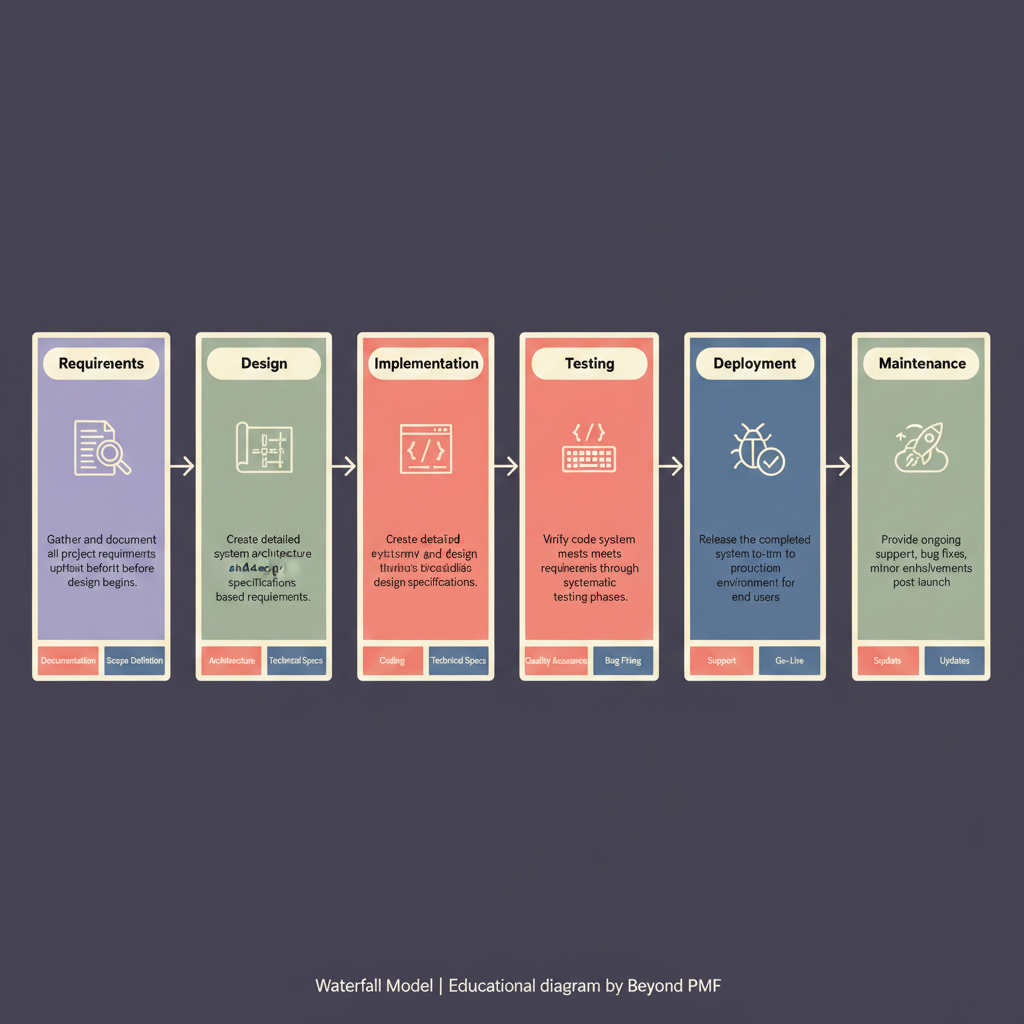
The Waterfall Model is a linear and sequential approach to software development and project management, characterized by a series of distinct phases that flow downwards like a waterfall. Each phase must be completed before the next begins, with little to no overlap between phases. This model is used because of its simplicity and ease of understanding, making it suitable for projects with clear objectives and stable requirements. It is beneficial for its ability to enforce discipline, meticulous record-keeping, and thorough documentation.