
Strategy frameworks help organizations define direction, make trade‑offs, and coordinate action toward long‑term outcomes. They connect market realities, customer value, and internal capabilities into coherent choices. These frameworks are vital for product portfolios, transformations, and leadership alignment. Use them to reduce ambiguity and drive focused execution.
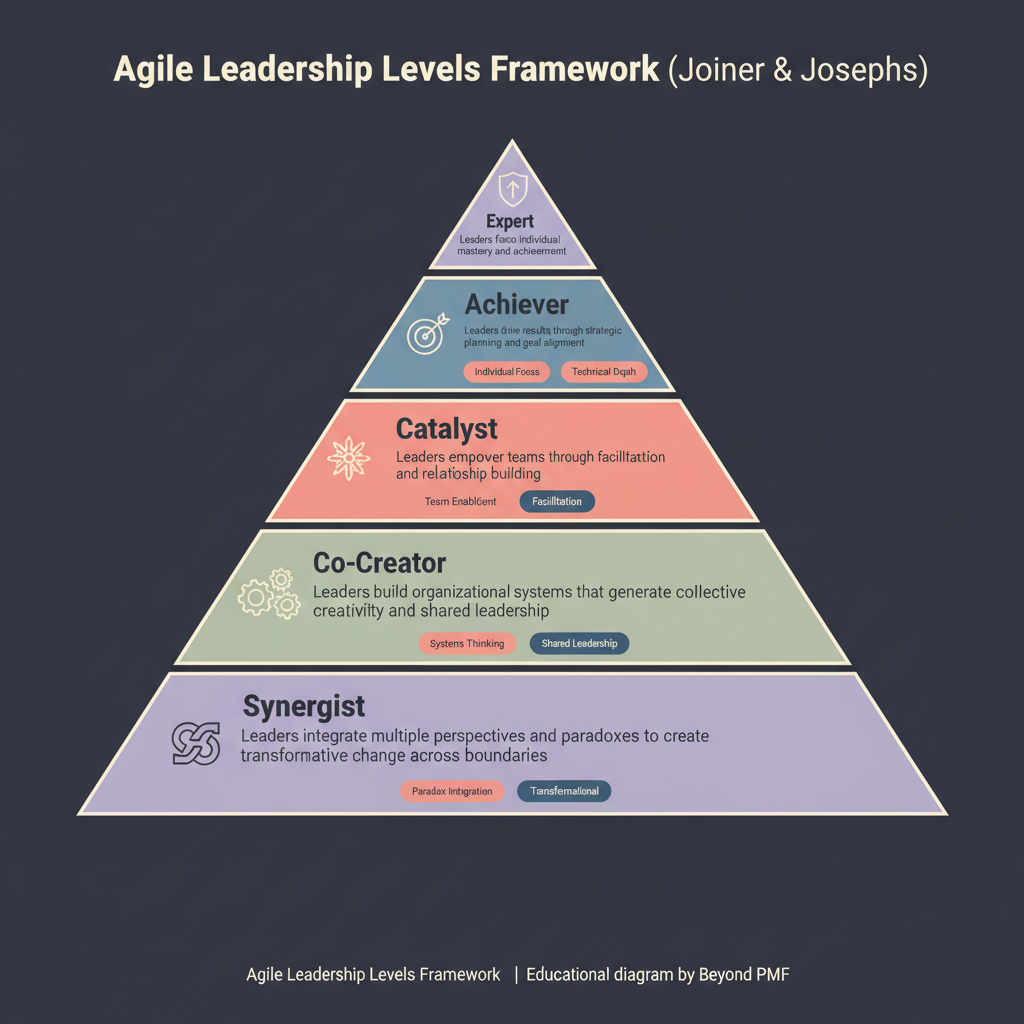
The Agile Leadership Levels Framework, developed by Bill Joiner and Stephen Josephs, is a leadership maturity model that explains how leaders grow their capacity to handle complexity, drive change, and align stakeholders over time.
Rather than focusing on specific agile practices, the framework emphasizes how leaders think, decide, and act under pressure and ambiguity.
The model outlines five progressive leadership levels, each representing a more advanced way of interpreting reality, engaging others, and shaping outcomes. As leaders move through these levels, they become better equipped to navigate organizational friction, conflicting priorities, and systemic challenges — making the framework particularly relevant for agile transformations, digital change initiatives, and strategy execution in complex environments.
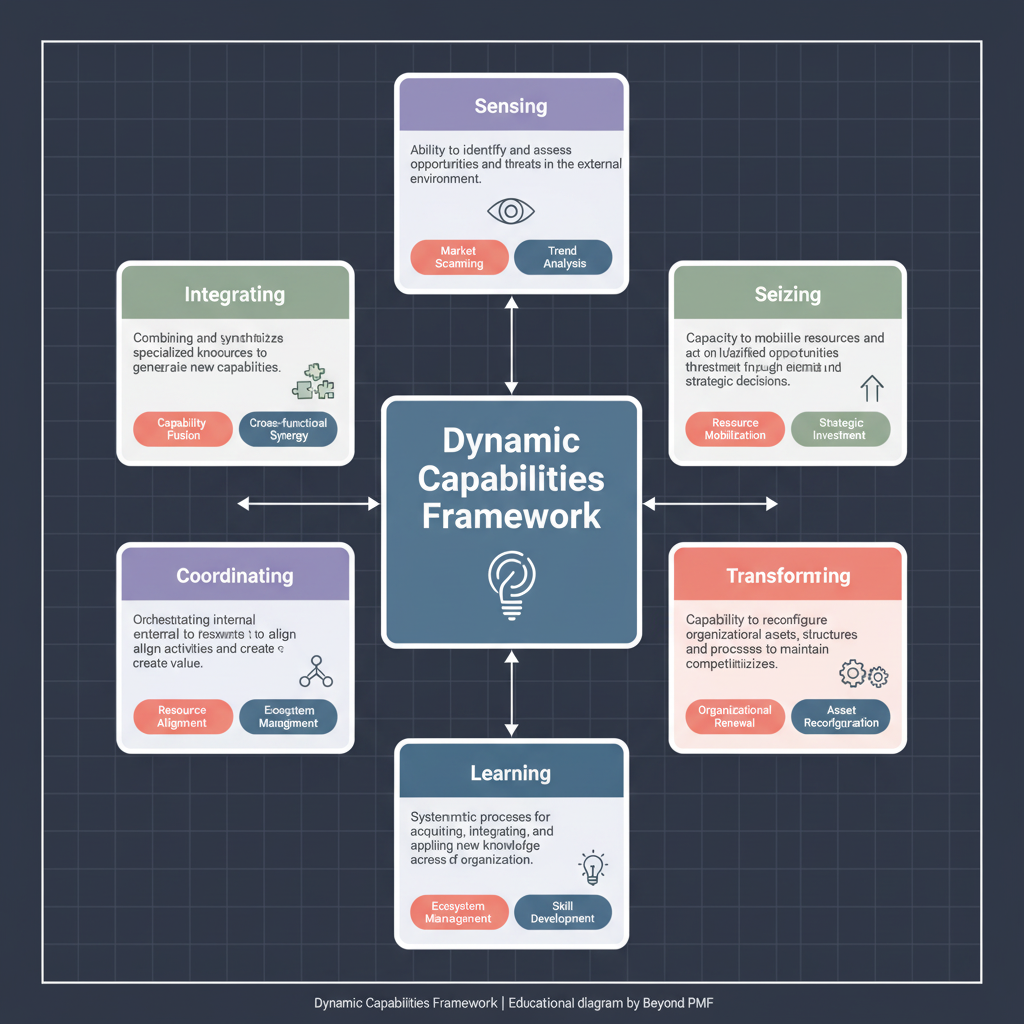
The Dynamic Capabilities Framework is a strategic management approach that emphasizes the role of managerial and organizational processes in leveraging a firm's capabilities to match and even create market change. It is used to understand how companies can sustain competitive advantage in markets characterized by rapid technological change and intense competition. The framework helps firms to innovate, adapt, and capture new opportunities, thereby achieving and sustaining competitive advantage.