
Organizational learning frameworks help teams and companies improve over time by capturing insights, reflecting on outcomes, and adapting behaviors. They institutionalize learning loops beyond individual projects. These frameworks are crucial during transformation, scaling, and complex delivery. Use them to prevent repeated mistakes and build resilient capabilities.
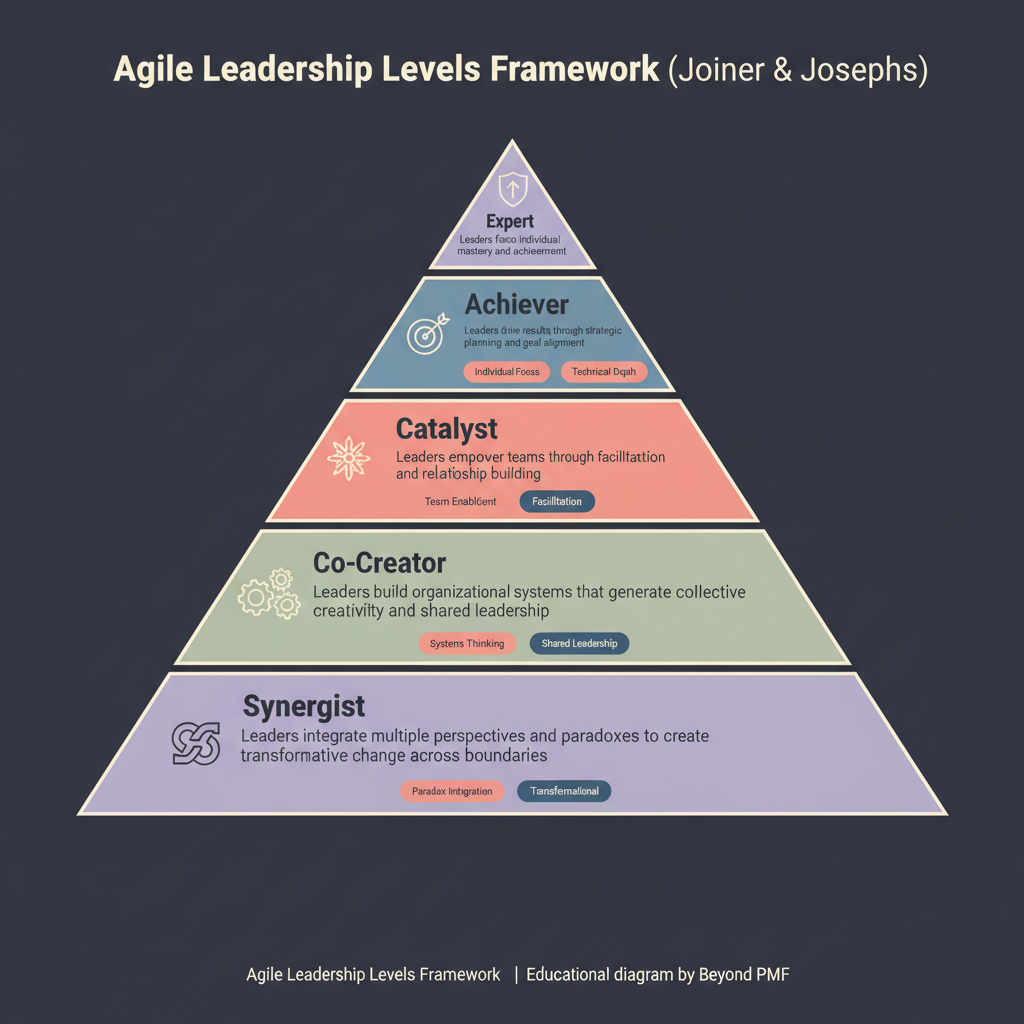
The Agile Leadership Levels Framework, developed by Bill Joiner and Stephen Josephs, is a leadership maturity model that explains how leaders grow their capacity to handle complexity, drive change, and align stakeholders over time.
Rather than focusing on specific agile practices, the framework emphasizes how leaders think, decide, and act under pressure and ambiguity.
The model outlines five progressive leadership levels, each representing a more advanced way of interpreting reality, engaging others, and shaping outcomes. As leaders move through these levels, they become better equipped to navigate organizational friction, conflicting priorities, and systemic challenges — making the framework particularly relevant for agile transformations, digital change initiatives, and strategy execution in complex environments.
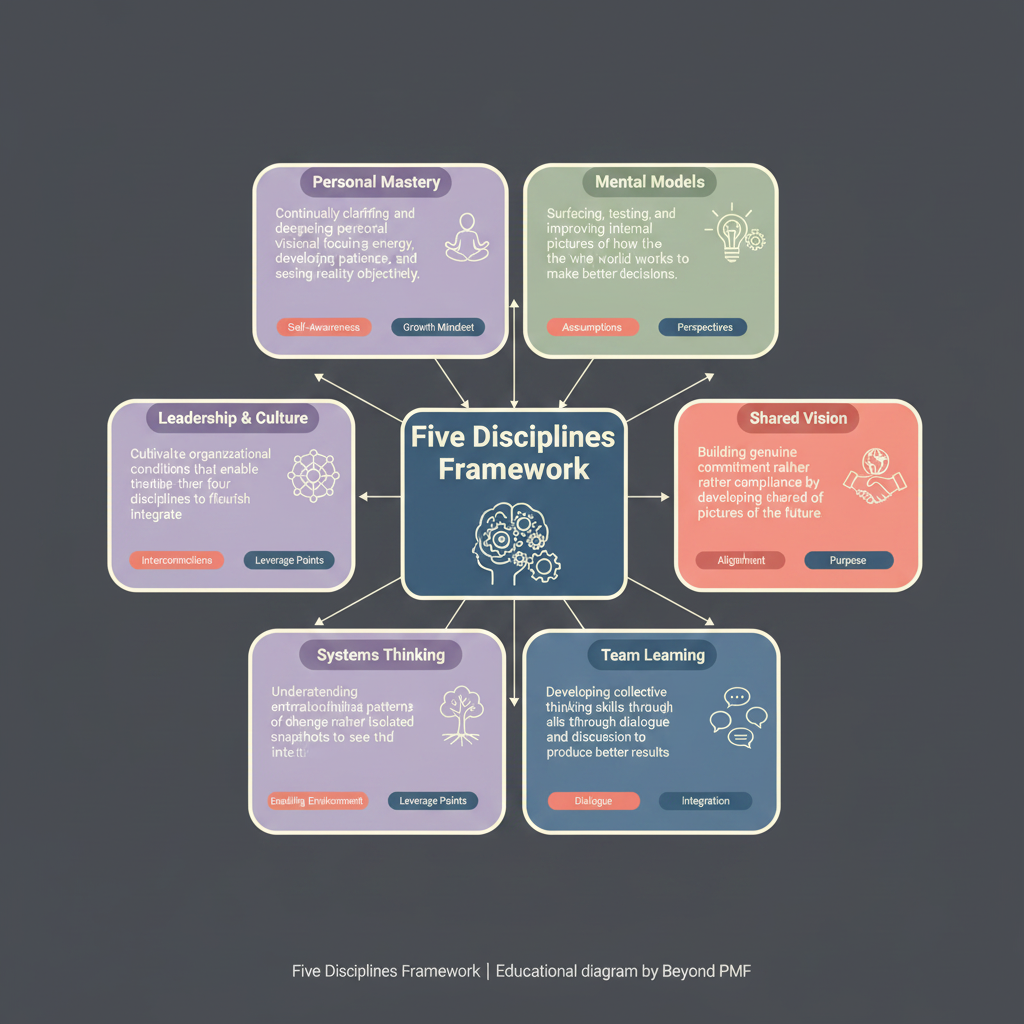
The Five Disciplines Framework, conceptualized by Peter Senge in his book 'The Fifth Discipline', is designed to help organizations create environments conducive to continuous learning and improvement. It emphasizes the importance of five interconnected disciplines: Personal Mastery, Mental Models, Shared Vision, Team Learning, and Systems Thinking. This framework is used to foster innovation, adaptability, and deeper understanding among team members, leading to enhanced organizational performance.