Product Usage Analytics

https://ik.imagekit.io/beyondpmf/frameworks/product-usage-analytics.png
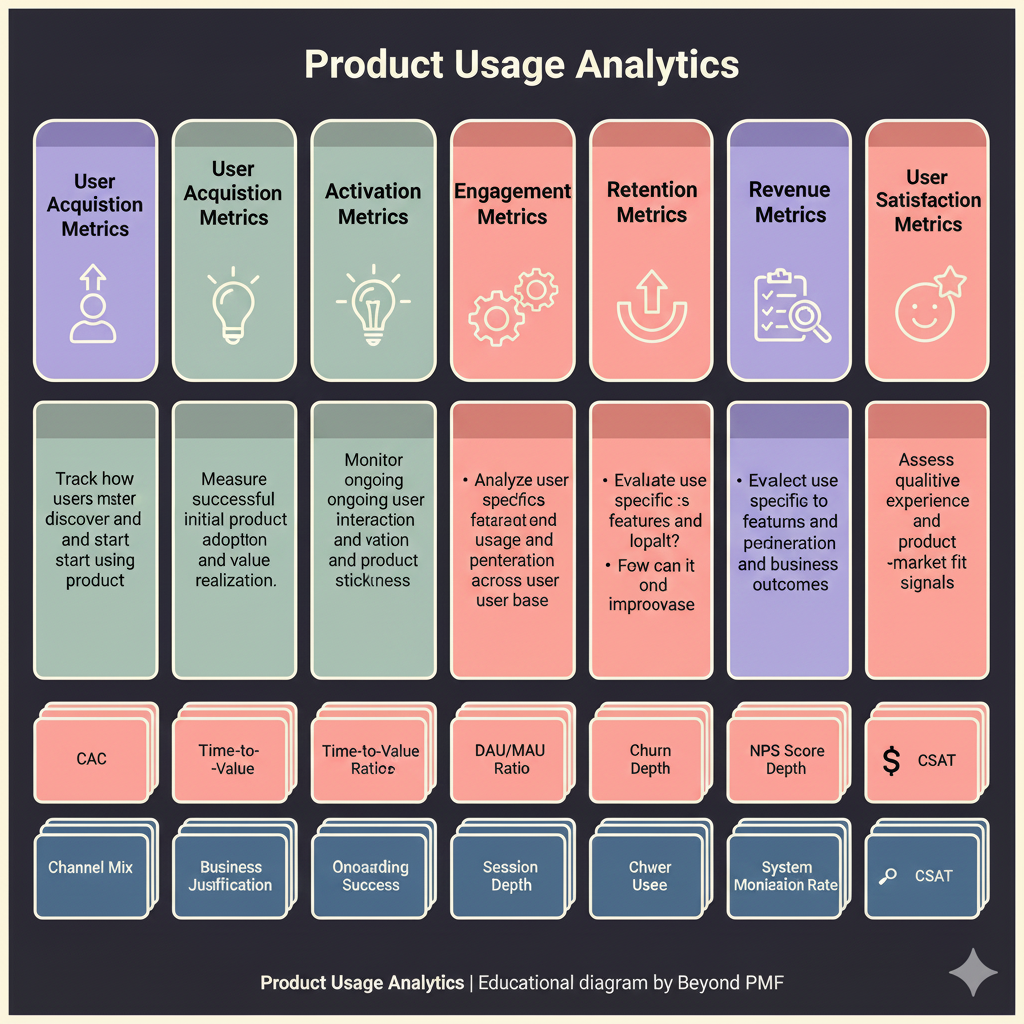
Product Usage Analytics addresses issues with customer experience (UX) by providing data on how users interact with the product. This data helps teams identify areas for improvement in the product's design, usability, and features, ultimately leading to a better customer experience. This falls under Execution as it directly impacts customer-facing delivery.

Product Usage Analytics is a data-driven framework that helps companies understand how their products are being used by customers. By tracking and analyzing user interactions, businesses can identify usage patterns, feature adoption rates, and areas for improvement. This framework is crucial for enhancing product development, optimizing user experience, and increasing customer satisfaction.

Steps / Detailed Description

Define key metrics and data points to track based on product goals. | Implement tracking tools and technologies to collect usage data. | Analyze data to identify trends, patterns, and insights. | Report findings to stakeholders and use insights to drive product decisions. | Continuously monitor and update the analytics setup to adapt to new product features and user behaviors.

Best Practices

Ensure user privacy and data security are prioritized. | Regularly update and maintain the data collection tools. | Use visualizations to better understand and communicate insights.

Pros

Provides insights into user behavior and preferences. | Helps in making data-driven decisions for product improvements. | Increases user engagement and satisfaction by tailoring features to user needs.

Cons

Requires significant resources for data collection and analysis. | Potential privacy concerns and need for compliance with data protection regulations. | Data may be misinterpreted, leading to incorrect conclusions.

When to Use

When optimizing a product based on user feedback and behavior. | When identifying which features are most and least used.

When Not to Use

When insufficient data protection measures are in place. | When the product is in early development stages with limited users.

Related Frameworks

Lifecycle

Not tied to a specific lifecycle stage

Scope

Scope not defined

Maturity Level

Maturity level not specified

Time to Implement

2–4 Weeks
3–6 Months
1–2 Weeks
3–6 Months
1–2 Months
3–6 Months
1–2 Weeks
Less Than 1 Day
1–2 Weeks
Longer Than 6 Months
1–2 Weeks
Longer Than 6 Months
1–2 Weeks
3–6 Months
1–2 Weeks
1–2 Weeks
1–2 Weeks
1–2 Weeks
1–2 Days
1–2 Weeks
1–2 Weeks
1–2 Weeks
1–2 Weeks
1–2 Weeks
1–2 Weeks
3–6 Months
1–2 Weeks
1–2 Weeks
1–2 Weeks
3–6 Months
1–2 Weeks
1–2 Weeks
2–4 Weeks
1–2 Weeks
1–2 Days
1–2 Weeks
Longer Than 6 Months
3–6 Months
Longer Than 6 Months
1–2 Weeks
Longer Than 6 Months
3–6 Months
Less Than 1 Day
3–6 Months
1–2 Months
3–6 Months
Longer Than 6 Months
3–6 Months
Less Than 1 Day
1–2 Weeks
3–6 Months
3–6 Months
1–2 Weeks
3–6 Months
1–2 Weeks
1–2 Weeks
1–2 Days
1–2 Weeks
1–2 Months
Longer Than 6 Months
1–2 Weeks
Longer Than 6 Months
1–2 Weeks
3–6 Months
1–2 Weeks
Less Than 1 Day
1–2 Weeks
3–6 Months
1–2 Weeks
3–6 Months
1–2 Weeks
1–2 Weeks
Longer Than 6 Months
Less Than 1 Day
3–6 Months
Longer Than 6 Months
1–2 Months
1–2 Weeks
Longer Than 6 Months
1–2 Weeks
3–6 Months
1–2 Weeks
1–2 Weeks
3–6 Months
Less Than 1 Day
1–2 Weeks
1–2 Weeks
3–6 Months
3–6 Months
Less Than 1 Day
1–2 Weeks
Longer Than 6 Months
1–2 Months
1–2 Weeks
1–2 Weeks
1–2 Weeks
Longer Than 6 Months

Copyright Information

Autor:
Unknown
N/A
Publication:
Generic Business Tool