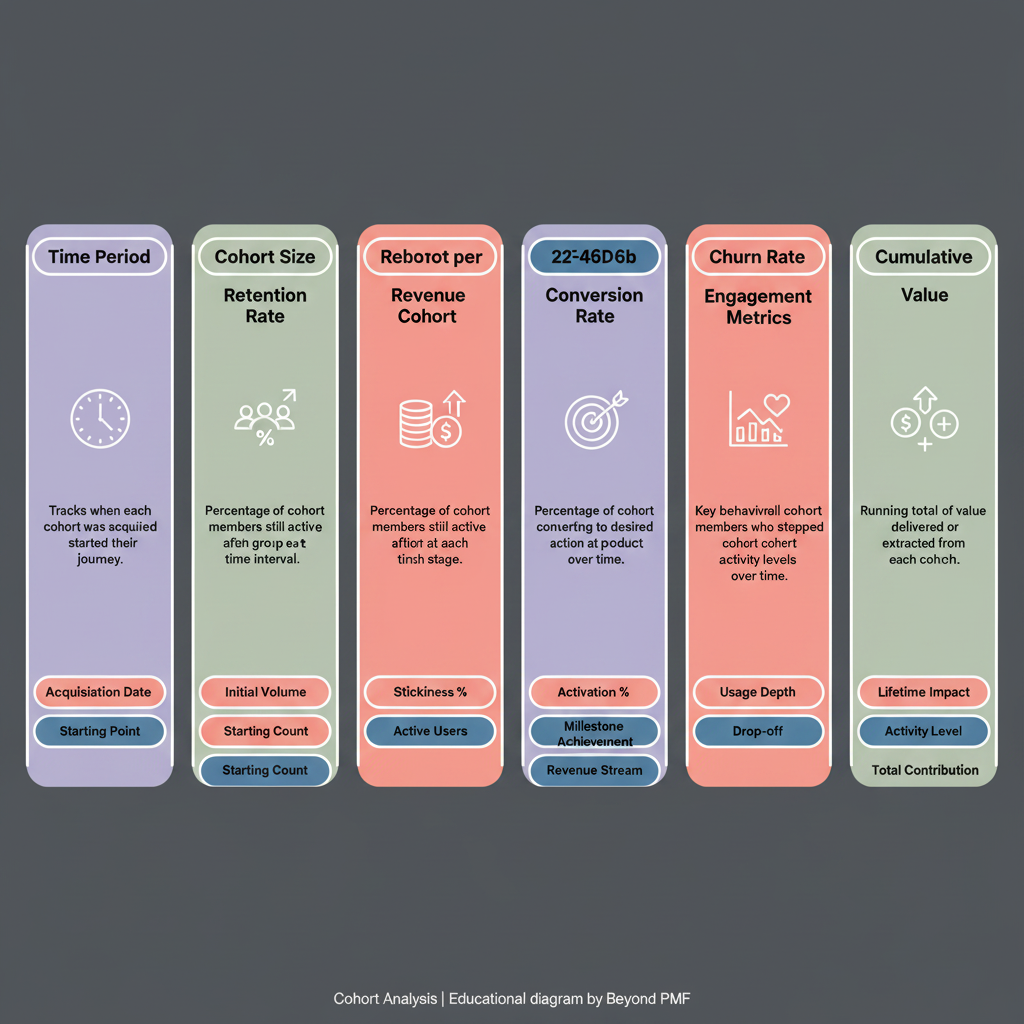
Cohort Analysis

https://ik.imagekit.io/beyondpmf/frameworks/cohort-analysis.png
Cohort analysis helps identify user behavior trends and issues with user experience over time. By segmenting users and tracking their actions, businesses can understand and address problems related to customer retention, product adoption, and overall user journey effectiveness.

Cohort Analysis is a powerful analytical framework used to study the activities and behaviors of segmented groups, or cohorts, within a given dataset. These cohorts are typically defined based on shared characteristics or experiences within a defined time-span. This analysis helps businesses track changes and trends over time, allowing for more personalized and effective decision-making. It is particularly beneficial in understanding customer retention, product adoption rates, and identifying potential areas for improvement.

Steps / Detailed Description

Define the objective of the analysis to determine what behaviors or metrics will be tracked. | Segment the data into cohorts based on shared characteristics or time frames. | Collect data over a specific period to monitor the cohorts' behavior. | Analyze the data to identify trends, patterns, and insights. | Report the findings in a clear and actionable manner.

Best Practices

Clearly define cohorts and objectives before collecting data | Use automated tools for data collection and analysis to save time | Regularly update and review cohort data to maintain relevance

Pros

Allows for detailed tracking of user behavior over time | Helps in identifying specific trends and patterns | Facilitates personalized and targeted marketing strategies

Cons

Can be time-consuming to set up and maintain | Requires large datasets to be effective | Potential for bias in cohort selection and analysis

When to Use

Analyzing customer retention and churn | Understanding the impact of specific business decisions or changes

When Not to Use

When the available data is too sparse or not representative | For quick, real-time decision making

Related Frameworks

Lifecycle

Not tied to a specific lifecycle stage

Scope

Scope not defined

Maturity Level

Maturity level not specified

Time to Implement

2–4 Weeks
3–6 Months
1–2 Weeks
3–6 Months
1–2 Months
3–6 Months
1–2 Weeks
Less Than 1 Day
1–2 Weeks
Longer Than 6 Months
1–2 Weeks
Longer Than 6 Months
1–2 Weeks
3–6 Months
1–2 Weeks
1–2 Weeks
1–2 Weeks
1–2 Weeks
1–2 Days
1–2 Weeks
1–2 Weeks
1–2 Weeks
1–2 Weeks
1–2 Weeks
1–2 Weeks
3–6 Months
1–2 Weeks
1–2 Weeks
1–2 Weeks
3–6 Months
1–2 Weeks
1–2 Weeks
2–4 Weeks
1–2 Weeks
1–2 Days
1–2 Weeks
Longer Than 6 Months
3–6 Months
Longer Than 6 Months
1–2 Weeks
Longer Than 6 Months
3–6 Months
Less Than 1 Day
3–6 Months
1–2 Months
3–6 Months
Longer Than 6 Months
3–6 Months
Less Than 1 Day
1–2 Weeks
3–6 Months
3–6 Months
1–2 Weeks
3–6 Months
1–2 Weeks
1–2 Weeks
1–2 Days
1–2 Weeks
1–2 Months
Longer Than 6 Months
1–2 Weeks
Longer Than 6 Months
1–2 Weeks
3–6 Months
1–2 Weeks
Less Than 1 Day
1–2 Weeks
3–6 Months
1–2 Weeks
3–6 Months
1–2 Weeks
1–2 Weeks
Longer Than 6 Months
Less Than 1 Day
3–6 Months
Longer Than 6 Months
1–2 Months
1–2 Weeks
Longer Than 6 Months
1–2 Weeks
3–6 Months
1–2 Weeks
1–2 Weeks
3–6 Months
Less Than 1 Day
1–2 Weeks
1–2 Weeks
3–6 Months
3–6 Months
Less Than 1 Day
1–2 Weeks
Longer Than 6 Months
1–2 Months
1–2 Weeks
1–2 Weeks
1–2 Weeks
Longer Than 6 Months

Copyright Information

Autor:
Public Domain
N/A
Publication:
Generic Business Tool