C4 Model

https://ik.imagekit.io/beyondpmf/frameworks/c4-model.png
The C4 Model primarily addresses the friction of communication and understanding in software architecture. By providing a clear and visual framework, it improves coordination and reduces misunderstandings among different stakeholders involved in the software development process.

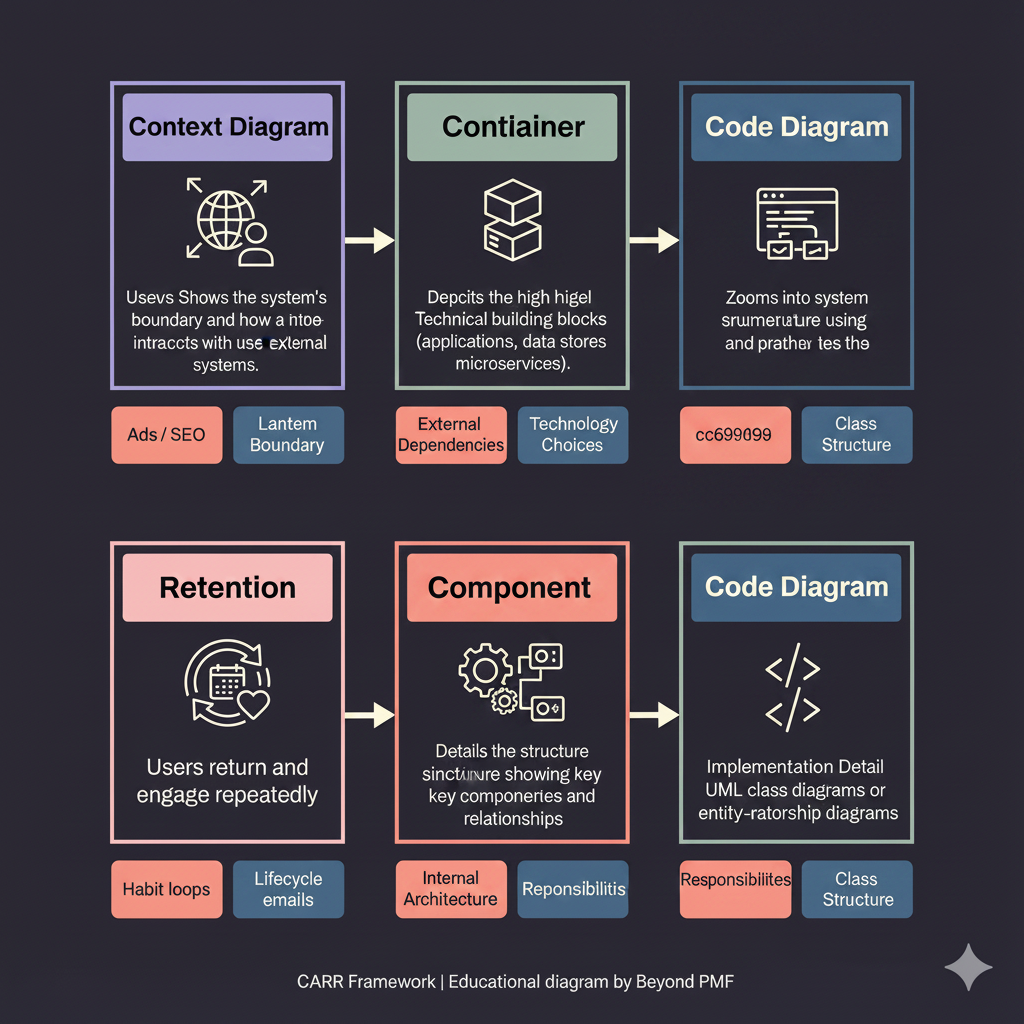
The C4 Model is a framework designed to help software development teams visualize and document software architecture. It stands for Context, Containers, Components, and Code, which represent different levels of abstraction. Each level addresses a specific set of concerns, making it easier to communicate the architecture to both technical and non-technical stakeholders. The model is widely appreciated for its clarity and ability to break down complex software designs into manageable and understandable pieces.

Steps / Detailed Description

Create a Context diagram to outline the system's interactions with users and other systems. | Develop a Container diagram to show the high-level technology choices and how the system is segmented. | Construct a Component diagram to detail the internal structure of the containers. | Define a Code diagram to delve into the implementation details of individual components.

Best Practices

Regularly update diagrams to reflect changes in the system | Use tools that support the C4 Model to streamline the creation and maintenance of diagrams | Involve stakeholders from both technical and non-technical backgrounds in the review process

Pros

Improves communication across technical and non-technical stakeholders | Provides a clear and structured approach to documenting software architecture | Facilitates better understanding and maintenance of the system

Cons

Can be time-consuming to create detailed diagrams for large systems | May require tooling or skills not readily available in all teams | Risk of diagrams becoming outdated if not maintained alongside changes

When to Use

When starting a new software development project | When taking over an existing project to better understand its architecture

When Not to Use

For very small or simple projects where the overhead may not be justified | In fast-paced environments where architecture evolves frequently

Related Frameworks

No related frameworks listed

Lifecycle

Not tied to a specific lifecycle stage

Scope

Scope not defined

Maturity Level

Maturity level not specified

Time to Implement

2–4 Weeks
3–6 Months
1–2 Weeks
3–6 Months
1–2 Months
3–6 Months
1–2 Weeks
Less Than 1 Day
1–2 Weeks
Longer Than 6 Months
1–2 Weeks
Longer Than 6 Months
1–2 Weeks
3–6 Months
1–2 Weeks
1–2 Weeks
1–2 Weeks
1–2 Weeks
1–2 Days
1–2 Weeks
1–2 Weeks
1–2 Weeks
1–2 Weeks
1–2 Weeks
1–2 Weeks
3–6 Months
1–2 Weeks
1–2 Weeks
1–2 Weeks
3–6 Months
1–2 Weeks
1–2 Weeks
2–4 Weeks
1–2 Weeks
1–2 Days
1–2 Weeks
Longer Than 6 Months
3–6 Months
Longer Than 6 Months
1–2 Weeks
Longer Than 6 Months
3–6 Months
Less Than 1 Day
3–6 Months
1–2 Months
3–6 Months
Longer Than 6 Months
3–6 Months
Less Than 1 Day
1–2 Weeks
3–6 Months
3–6 Months
1–2 Weeks
3–6 Months
1–2 Weeks
1–2 Weeks
1–2 Days
1–2 Weeks
1–2 Months
Longer Than 6 Months
1–2 Weeks
Longer Than 6 Months
1–2 Weeks
3–6 Months
1–2 Weeks
Less Than 1 Day
1–2 Weeks
3–6 Months
1–2 Weeks
3–6 Months
1–2 Weeks
1–2 Weeks
Longer Than 6 Months
Less Than 1 Day
3–6 Months
Longer Than 6 Months
1–2 Months
1–2 Weeks
Longer Than 6 Months
1–2 Weeks
3–6 Months
1–2 Weeks
1–2 Weeks
3–6 Months
Less Than 1 Day
1–2 Weeks
1–2 Weeks
3–6 Months
3–6 Months
Less Than 1 Day
1–2 Weeks
Longer Than 6 Months
1–2 Months
1–2 Weeks
1–2 Weeks
1–2 Weeks
Longer Than 6 Months

Copyright Information

Autor:
Simon Brown
2011
Publication:
simonbrown.je